

Originally published: February 2026

A drain and sewer maintenance plan prevents costly backups in high-use Portland commercial properties by mapping drain zones, controlling fats, oils, and grease (FOG), cleaning mainlines on a tiered schedule, and verifying results with camera documentation.
The goal is simple. Restore pipe capacity before peak-hour demand triggers an overflow, shutdown, or health risk.
A structured drain and sewer maintenance plan keeps you ahead of costly backups by targeting your building’s weak spots.
Most commercial property managers don’t act until water backs up through floor drains or sewage smells hit the restrooms.
By then, you’re already facing emergency pricing and potentially code violations.
Your building’s drains require different care than those in a house. Commercial lines handle kitchen grease, heavy restroom use, and all sorts of materials that shouldn’t end up in pipes but do anyway.
Regular maintenance helps you spot trouble early—before it spirals into something that shuts your doors.
| System area | Primary risk | Preventive action | Baseline cadence (adjust by risk) | Proof to keep |
| Kitchen lines | FOG buildup and solids | Grease control SOPs, targeted line cleaning | Monthly for high-use kitchens | Service log, SOP checklist, photos |
| Grease interceptor | FOG bypass and blockages | Pump out, inspect baffles and tees, and confirm condition | Per program needs and usage level | Pump-out ticket, inspection notes |
| Restroom branches | Paper load and wipes | Targeted clearing, fixture checks | Quarterly in high traffic | Work order notes |
| Building mainline | Capacity loss, roots, scale | Cleaning and verification camera checks | Quarterly to semiannual by tier | Before and after notes, video file name |
| Exterior drains and catch basins | Debris and sediment | Debris removal, cleaning | Quarterly, an increase in the wet season | Maintenance log, photos |
| Corrective repairs | Offsets, collapse, chronic roots | Repair plan, lining, or replacement scope | As defects are found | Camera report, estimate, completion record |
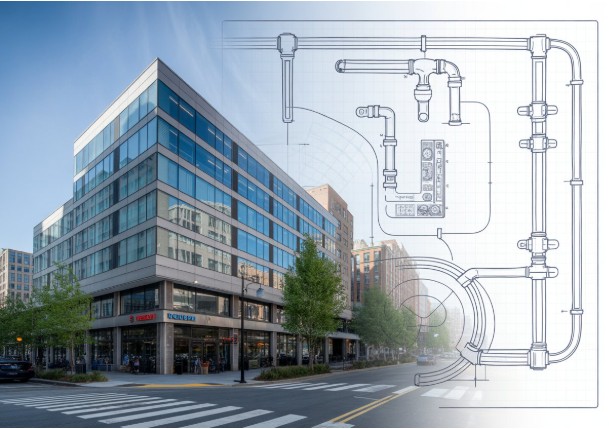
Most commercial backups start with predictable restrictions. FOG, solids, roots, and scale reduce the internal diameter, forcing peak-hour flow to push wastewater back through the lowest drains.
Portland’s FOG guidance explicitly links poor grease control to sewer backups and costly sewer problems, so the plan must treat kitchens and interceptors as priority assets.
| Failure mode | Where it usually happens | Early warning signs | Prevention action that works | Verification |
| FOG accumulation | Kitchen lines, shared mains near food tenants | Slow sinks, recurring odors, and a grease sheen | Grease SOPs plus scheduled cleaning | Log plus photos, optional camera |
| Foreign objects and debris | Restrooms, mop sinks, floor drains | Frequent clogs in the same fixtures | Strainers, signage, targeted clearing | Work order history |
| Root intrusion | Older laterals and joints | Recurring stoppages after clearing | Camera locate, then cutting or repair plan | Time-stamped camera footage |
| Scale and corrosion | Cast iron branches and mains | Slow drains, gurgling, reduced flow | Mechanical cleaning or jetting when safe | Post-clean inspection notes |
| Poor slope or installation | Long horizontal runs, remodel tie-ins | Chronic slow zones, sediment return | Corrective re-pitch or re-route scope | Camera plus as-built updates |
| Peak-hour demand overload | High occupancy tenants | Multiple drains are slow at once | Increase cadence and add mainline focus | Incident log trendline |
Portland requires grease interceptors for food service spots, but enforcement shapes your maintenance schedule. The city’s fats, oils, and grease programs set cleaning intervals based on trap size and waste volume.
Heavy rain during Portland’s wet months puts additional strain on combined sewer systems.
When stormwater and wastewater mix, your drains can get hit with backflow pressure. That means sewage odors and slow drain,s even if your inside pipes look fine.
Older unreinforced masonry buildings pose a higher risk. They often have outdated plumbing that can’t keep up with modern commercial use, so you really can’t skip preventive plans if you want to avoid expensive emergencies.
Do not assume a “Portland sewer issue” is always the cause. A backup can be triggered by a private lateral restriction, an interior branch failure, or a grease interceptor bypass.
A camera inspection creates a defensible diagnosis before selecting hydro jetting or repairs.

Your drain and sewer system needs clear boundaries and a detailed list of all components you are responsible for maintaining. Defining zones lets you focus on the areas that matter most, while a full asset inventory keeps anything from slipping through the cracks.
Start by dividing your property into zones based on drainage patterns and use levels in each area. Kitchen and food prep areas? That’s a high-priority zone. Restrooms also require frequent checks.
Loading docks, outdoor drains, and parking lot catch basins perform best when treated as separate zones. Each one needs its own maintenance schedule, depending on what flows through it.
Mark the main sewer line connection point where your system meets the city’s. That’s your boundary—your responsibility ends there, and Portland’s begins. Document which drains lead to which main lines, so you know exactly how wastewater travels through your building.
Label floor drains, grease traps, and cleanout access points on your map. If possible, add the pipe diameter and material type for each section. That info helps you plan maintenance and manage costs more accurately.
List every drain, trap, pipe section, and access point in a spreadsheet or maintenance app. Your register should include:
Add columns for the last inspection date and the next scheduled maintenance. Make a note of anything that has been a problem before, or that sits in a heavy-grease or debris area.
Track both the assets you own and the resources you spend on them. Update your register whenever you repair, replace, or add new drainage parts.
This list is your foundation for scheduling preventive work and budgeting for replacements down the road.
Modern Plumbing PDX helps Portland commercial properties prevent costly sewer backups with structured drain and maintenance plans, camera verification, and documented service history. Schedule an assessment today.
If you’re ready to get started, call us now!
Different businesses require different maintenance frequencies based on how often their drains are used and the issues they’ve experienced in the past.
A restaurant kitchen? That needs more frequent attention than a quiet law office. If you keep experiencing backups, you’ll need to tighten your schedule regardless of the type of business you run.
High-use areas such as restaurants, food-processing plants, and hospitals should undergo monthly drain inspections and cleaning. These places generate significant grease, food waste, and debris that accumulate quickly.
Commercial kitchens need preventative maintenance—grease trap cleaning and line jetting—every 30 days.
Hotels and large multi-family buildings (50+ units) benefit from quarterly maintenance to remove hair, soap, and other organic buildup.
Moderate-use properties, such as retail stores, small offices, and warehouses, can typically get by with quarterly or semiannual visits.
They just don’t generate as much drain waste. Even so, keep documentation of every maintenance job for local inspections.
If your building has a history of backups, you need to adjust your schedule right away. Two or more emergencies in a year? Switch to monthly maintenance until things settle down.
Slow drains, gurgling, or weird odors mean trouble is brewing. These symptoms usually show up weeks before a full blockage. If you notice them, request an inspection and schedule your maintenance visits every 4-6 weeks.
If you haven’t had a backup in two years, you can safely stretch out your maintenance intervals.
Move from quarterly to semi-annual after 24 months of smooth sailing. Keep tracking maintenance and tests so you can spot patterns and adjust based on real system performance—not just a calendar.
Use this as a baseline, then tighten the cadence when symptoms or history indicate an increasing risk of restriction. Avoid hard promises. Site conditions, pipe age, and tenant operations drive the final schedule.
| Property or tenant type | Baseline maintenance cadence | Elevated cadence triggers | Recommended methods |
| Restaurants, food halls, and breweries | Monthly kitchen line attention plus mainline focus | Any recurring odor, slowdowns, or grease interceptor issues | Targeted cleaning, interceptor service, periodic camera |
| Hospitals, high-traffic facilities | Monthly to quarterly by zone | Multiple slow drains, peak-hour gurgling | Zone-based cleaning, camera verification on chronic lines |
| Hotels, large multifamily, gyms | Quarterly | Repeat stoppages in the same stacks | Branch cleaning, mainline cleaning as needed |
| Retail, office, light-use | Quarterly to semiannual | Tenant changeover, new occupancy load | Targeted clearing, camera if symptoms persist |
Portland commercial properties require tailored drain-cleaning strategies based on pipe condition, blockage type, and usage patterns. The right combo keeps your pipes safe while properly clearing them.
Hydro jetting uses high-pressure water (3,000–4,000 PSI) to blast through your main sewer lines and clear grease and stubborn clogs. This works best for restaurants and food businesses where grease builds up fast. High-pressure jetting machines can remove years of buildup in a single pass.
Mechanical snaking with drain tools and augers costs less up front and tackles solid blockages, such as roots or foreign objects.
Use snakes on older cast-iron pipes that may crack under high water pressure. These tools clear clogs without stressing fragile pipes.
Enzyme treatments break down organic gunk slowly over time. They’re good for prevention in low-risk lines, but can’t clear active blockages.
Apply enzymes monthly in the kitchen and floor drains with moderate grease exposure to keep things moving.
A sewer line inspection with video gear shows you exactly where the issues are before you pick a cleaning method.
You’ll see real-time footage of pipe condition, cracks, and blockages. This helps you avoid unnecessary hydro jetting on pipes that actually need repairs.
Keep inspection records with time-stamped videos, pipe depth, and material notes. Record distances from access points to any defects. Store these so you can compare during future checks and track how things change over time.
Schedule annual camera inspections for high-use properties, or do so immediately if drains remain slow.
The footage helps you plan repairs during off-hours and gives you proof for insurance claims or tenant disputes.
Detailed records protect your facility from fines and help you out in disputes. Portland’s grease rules require specific documentation, and that paperwork is your shield during inspections.
You need three types of records to stay protected. Service logs should include each pump-out date, the technician’s name, and the gallons removed from your grease trap or interceptor.
These logs show your maintenance frequency meets Portland’s requirements.
Inspection reports from licensed plumbers document the condition of your drain lines. They also help you spot problems before they get out of hand.
Keep both routine inspection reports and emergency service records in one organized system.
Compliance certificates confirm that your grease management equipment meets city specifications. Store manufacturer specs, installation permits, and quarterly inspection results together.
Proper documentation helps organizations avoid legal penalties, audits, and reputational damage by creating a clear trail of compliance.
Go digital with your documentation. Paper records tend to vanish during staff turnover or facility renovations.
Cloud storage with automatic backups keeps your compliance history handy during audits or insurance claims. It’s just less stressful than digging through old file cabinets.
Portland’s Fats, Oils, and Grease program outlines the operating procedures your staff must follow every day. Turn these requirements into written SOPs that kitchen managers can actually use during a shift.
Your SOPs should cover three main areas:
Train every kitchen employee on these procedures during onboarding. Document each training session with signatures and dates.
This creates compliance documentation that proves your business is prepared for audits and helps avoid penalties during inspections.
Update your SOPs when Portland changes its FOG requirements. The city sometimes adjusts pump-out frequencies and grease-trap specifications based on your facility’s discharge history.
If you’re ready to get started, call us now!
Your commercial property needs clear indicators that warn you when a slow drain is about to become a crisis. You also need a plan your staff can pull off fast if things go sideways.
You need specific warning signs that demand immediate action before a backup shuts you down. When multiple drains run slowly simultaneously, your main line is likely experiencing a blockage.
Gurgling sounds from floor drains or toilets usually indicate air is being pushed through a restricted line.
Water pooling near floor drains or backing up in your lowest fixtures indicates the system is approaching capacity.
If you smell sewage away from bathrooms or spot water stains around drain openings, your window to prevent a shutdown is closing fast. It’s not a good sign—trust your gut.
Write these triggers into a checklist that your custodial staff and managers can use. Attach a severity level to each trigger.
Level 1 might be a single slow drain that just needs monitoring. Level 2 could be multiple slow drains needing same-day service.
Level 3 indicates it’s time for emergency plumbing and, if necessary, planning for closure.
Set clear thresholds: If you see water backing up in more than two spots, or if any backup has visible sewage, jump straight to Level 3.
Your team needs a step-by-step protocol that kicks in the moment someone spots a trigger.
Whoever notices the problem should immediately notify the facility manager and note what they saw, including the time and location.
Within 15 minutes, your point person needs to decide if it’s Level 2 or 3. For Level 2, call your usual drain service and book same-day help.
For Level 3, call emergency plumbing services and start your shutdown prep checklist.
| Severity level | Trigger signals | Response time | Immediate actions | Who owns it |
| Level 1 | Single slow drain in one zone | 24 to 72 hours | Log incident, monitor, schedule routine service | Site manager |
| Level 2 | Two slow zones, gurgling, recurring odors | Same day | Restrict use in the affected zone, call the service, consider a camera | Facility manager |
| Level 3 | Water backing up, sewage odor beyond restrooms, pooling at low drains | Immediate | Stop water use, containment, emergency response, and document the incident | Facility manager plus vendor |
If a line slows again after clearing, stop repeating the same tool. A camera inspection usually identifies the structural cause, which prevents endless emergency calls.
Emergency drain repairs usually cost three to five times as much as scheduled maintenance visits.
You end up paying premium rates for after-hours service and expedited parts, and then there’s the water damage restoration that follows a backup—never ideal.
A preventive maintenance plan actually delivers measurable returns. Regular inspections catch small clogs before they become complete blockages.
You won’t have to close your restaurant, retail store, or office building during emergency repairs. That means you avoid losing revenue and the stress that comes with it.
Cost Comparison for Commercial Properties:
| Expense Type | Emergency Response | Preventive Plan |
| Service call | $500-$800 | $150-$300 |
| Labor rates | 2x-3x standard | Standard rates |
| Downtime cost | $2,000-$10,000/day | Minimal |
| Water damage | $5,000-$50,000 | Avoided |
Portland businesses get a real boost from emergency response planning that includes regular drain maintenance. You can schedule cleanings during off-peak hours so you don’t disrupt your daily operations.
Preventive care reduces long-term costs across industries by catching problems early. The same logic totally applies to your commercial plumbing system.
Most businesses start seeing returns within six months. Your preventive plan may cost $200- $500 per month, depending on your property’s size.
One avoided emergency can pay for a whole year of maintenance—kind of wild when you think about it.
Additional savings include:
You protect your Portland property investment and keep operational expenses in check.
Stop reacting to emergencies and start controlling system performance. A documented plan from Modern Plumbing PDX reduces the risk of backups, protects tenants, and stabilizes maintenance costs year-round. Keep your Portland property running reliably. Contact us today.
How often should high-use Portland commercial properties clean main sewer lines?
Most high-use buildings benefit from quarterly mainline cleaning, with subsequent adjustments based on tenant mix, pipe age, and symptom history. Repeated slowdowns or peak-hour gurgling usually justify a tighter schedule and a camera inspection.
What causes repeat sewer backups after drain cleaning
Repeated backups often indicate an underlying defect, such as roots, offsets, scale, or a persistent grease source. A camera inspection is the fastest way to confirm the cause and prevent repeated emergency clearing.
Do enzyme treatments prevent backups in commercial drain lines?
Enzymes can support prevention in low-risk lines by reducing organic buildup over time, but they do not remove grease mats, roots, or solid obstructions. Use them only as a supplement to scheduled cleaning and inspections.
What are the early warning signs of a commercial sewer backup?
Multiple slow drains at once, gurgling from floor drains or toilets, recurring sewage odors, and pooling near low fixtures signal a rising risk of restriction. Treat these as escalation triggers, not routine annoyances.
What records should a Portland facility manager keep for drain and sewer maintenance?
Keep a maintenance log, grease interceptor pump-out records, camera inspection reports, SOP training records, and incident reports. Portland also inspects grease interceptors and can cite deficiencies, so proof of maintenance reduces compliance risk.
Are grease interceptors required for Portland food service businesses
Portland’s guidance references Oregon Plumbing Specialty Code requirements for grease interceptors for new construction, redevelopment, tenant improvements, or changes in ownership or occupancy. Treat tenant changeovers as triggers to review the interceptor connection and capacity.
When should a building get a camera inspection?
Use a camera inspection when symptoms repeat, when a mainline backs up, or when the property has older piping and unknown conditions. Camera documentation also supports budgeting and reduces disputes about what caused the failure.
How does Portland’s FOG guidance affect preventive maintenance plans?
Portland states that FOG can cause sewer backups and overflows, and publishes best practices businesses can adopt. Convert those BMPs into staff SOPs, interceptor maintenance routines, and documentation, then tie cadence to real kitchen output.
Quick Links
Plumbing Services
SW Washington Service Areas
Oregon Service Areas