

Originally published: June 2026

Tankless water heater installation in Portland costs $2,500 to $4,500 and typically requires a plumbing permit, code-compliant venting, and a unit sized for Oregon’s unusually cold incoming groundwater, which runs 51 to 55°F — colder than most US regions.
A licensed plumber completes a standard tank-to-tankless conversion in a full day, longer than a like-for-like tank swap, because of the additional venting and gas line work involved.
Portland’s groundwater temperature is the detail most installation guides skip, and it directly affects which size unit a home actually needs, not just whether a tankless system is a good idea in general.
Schedule a free tankless installation consultation with Modern Plumbing — serving Portland since 1959, sized right for Oregon’s water.
A tankless gas water heater installation in the Portland metro area costs $2,500 to $4,500, covering the unit, labor, venting, and any gas line upgrades required for the conversion.
This runs higher than a standard tank swap, which costs $1,200 to $2,500 installed, because a tankless conversion typically takes a full day of labor rather than the 2 to 4 hours a like-for-like tank replacement needs.
The added cost comes from three sources: the unit itself costs more than a comparable tank, new venting is required because tankless units vent differently than tanks, and many homes need a larger gas line to supply the higher instantaneous demand that a tankless system places on it.
A home with an existing larger gas line avoids that specific cost, which is one reason quotes vary between otherwise similar Portland commercial properties and residential properties alike.
If you’re ready to get started, call us now!
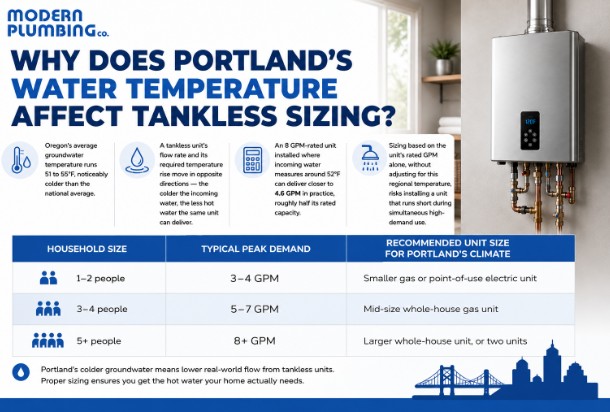
Oregon’s average groundwater temperature runs 51 to 55°F, noticeably colder than the national average, which means a tankless unit installed in Portland delivers a lower maximum flow rate than the same model would in a warmer climate, since the unit has to work harder to raise the water temperature.
The Portland Water Bureau’s own water quality data confirms this seasonal groundwater temperature range for the Columbia South Shore Well Field, the secondary source the city draws on when the Bull Run supply runs low.
A tankless unit’s flow rate and its required temperature rise move in opposite directions — the colder the incoming water, the less hot water the same unit can deliver per minute at a usable temperature.
This is the calculation a generic national sizing guide misses: an 8 GPM-rated unit installed where incoming water measures around 52°F can deliver closer to 4.6 GPM in practice, roughly half its rated capacity, once the math accounts for Portland’s actual groundwater temperature rather than a warmer national average.
A homeowner sizing a tankless system based on the unit’s rated GPM alone, without adjusting for this regional temperature, risks installing a unit that runs short during simultaneous high-demand use — a shower and a dishwasher running together, for example.
| Household Size | Typical Peak Demand | Recommended Unit Size for Portland’s Climate |
| 1–2 people | 3–4 GPM | Smaller gas or point-of-use electric unit |
| 3–4 people | 5–7 GPM | Mid-size whole-house gas unit |
| 5+ people | 8+ GPM | Larger whole-house unit, or two units |
Every tankless water heater installation in Portland requires a plumbing permit, and a conversion from a tank to a tankless water heater often requires a mechanical permit for gas line upgrades and an electrical permit if the home’s electrical service needs modification.
The Oregon Plumbing Specialty Code governs the installation itself, covering correct venting materials, gas pipe sizing, and connection standards that a city inspector verifies before signing off.
A licensed plumber typically files all required permits as part of the installation and schedules the final inspection on the homeowner’s behalf, so the paperwork doesn’t fall solely on the homeowner to navigate.
Skipping a required permit for a tankless conversion creates the same risks as skipping one for a tank replacement: a failed resale inspection, a voided manufacturer’s warranty, or a code violation discovered later.
If you’re ready to get started, call us now!
Whether a home needs a gas line or an electrical upgrade depends on the home’s existing infrastructure: a whole-house gas tankless unit typically requires a larger gas line than a standard tank, while an electric tankless unit requires a dedicated high-amperage circuit that older homes frequently lack.
Many older Portland homes were built with gas lines sized for a smaller-tank water heater, so a tankless conversion in one of these homes often requires upgrading the line as part of the installation rather than connecting directly to what’s already there.
An electric tankless unit draws considerably more power at once than a tank ever did, which is why some homes require an electrical panel upgrade to support it — a cost that doesn’t apply to a gas conversion with adequate existing gas service.
A technician’s confirmation of the home’s existing gas line size or electrical panel capacity during the initial assessment determines whether this additional cost applies before the homeowner commits to a quote.
A tankless installation appointment begins with shutting off the water, gas, and electrical supplies to the existing unit, followed by removal of the old tank if one is present, and proceeds with mounting, connecting, and venting the new tankless unit according to manufacturer specifications and Oregon code.
The technician then tests the system for proper temperature output and checks every connection for leaks before considering the job complete.
A straightforward conversion in a home with adequate existing gas line and venting access typically finishes within a single day, while a home requiring gas line upgrades, new venting routes, or electrical work can take longer, depending on the scope of that additional work.
A homeowner scheduling an installation benefits from confirming during the initial assessment whether any of these upgrades apply, since that’s what determines the actual appointment length rather than the installation itself.
NW Natural and Energy Trust of Oregon together offer a $400 cash incentive for existing NW Natural gas customers who convert a tank water heater to a qualifying gas tankless unit, available through August 31, 2026.
Eligibility depends on the specific unit’s efficiency rating meeting program requirements, so confirming a model qualifies before purchase is what secures the rebate rather than assuming any tankless unit automatically counts.
The federal Section 25C tax credit, which previously applied to qualifying water heaters, expired on December 31, 2025, leaving Oregon’s state- and utility-funded incentives as the primary savings path for a 2026 tankless installation.
A technician confirming eligibility for the specific model being installed before the purchase is finalized prevents the loss of the rebate on an otherwise qualifying unit.
How much does tankless water heater installation cost in Portland?
Tankless installation costs $2,500 to $4,500 in the Portland metro area, covering the unit, labor, venting, and any gas line upgrades required on the home. This runs higher than a standard tank swap due to the additional venting and gas work involved.
Why does Portland’s water temperature matter for tankless sizing?
Oregon’s groundwater runs 51 to 55°F, colder than the national average, which lowers a tankless unit’s effective flow rate compared to the same unit in a warmer climate. A unit sized using national averages alone can underdeliver during simultaneous high-demand use in a Portland home.
Is a permit required for tankless water heater installation in Portland?
Yes, a permit is required for every installation. Every tankless installation requires a plumbing permit, and a conversion may also require a mechanical or electrical permit, depending on the scope. A licensed plumber typically files these as part of the installation process.
Does my home need a gas line upgrade for a tankless water heater?
Many older Portland homes have gas lines sized for a smaller tank water heater, so a whole-house tankless conversion often requires a larger gas line to meet the unit’s instantaneous demand. A technician confirms this during the initial assessment before providing a final quote.
How long does a tankless water heater installation take?
A straightforward conversion in a home with an adequate existing gas line and venting access typically completes in a single day. Homes requiring gas line upgrades, new venting, or electrical work take longer, depending on the scope of that additional work.
Are there rebates for tankless water heater installation in Oregon?
NW Natural and Energy Trust of Oregon offer a combined $400 incentive for qualifying gas tankless conversions through August 31, 2026. Eligibility depends on the specific unit’s efficiency rating, which a technician can confirm before purchase is finalized.
What size tankless water heater do I need for a Portland home?
Sizing depends on household size, peak simultaneous hot-water demand, and Portland’s specific groundwater temperature, which reduces a unit’s effective flow rate relative to warmer-climate sizing charts. A technician calculates this during an in-home assessment rather than relying on rated capacity alone.
Does an electric tankless water heater need an electrical panel upgrade?
Many electric tankless units draw more power at once than a typical home’s existing panel can support, especially in older homes, which may require an electrical panel upgrade as part of the installation. A gas tankless conversion avoids this specific cost if the home’s gas service is already adequate for the unit.
Can a tankless water heater be installed in the same location as my old tank? Often yes, but the new venting requirements and connection points sometimes require relocating the unit or modifying the installation space entirely. A technician confirms whether the existing location works during the initial in-home assessment.
What’s included in a tankless installation quote?
A complete quote should itemize the unit, installation labor, the plumbing permit, and any gas line, venting, or electrical upgrades required by the conversion on the property. Confirming each line item separately allows a homeowner to accurately compare quotes from contractors.
Get a tankless sizing consultation from Modern Plumbing — correctly sized for Portland’s water, no guesswork.
Quick Links
Plumbing Services
SW Washington Service Areas
Oregon Service Areas