

Originally published: July 2026
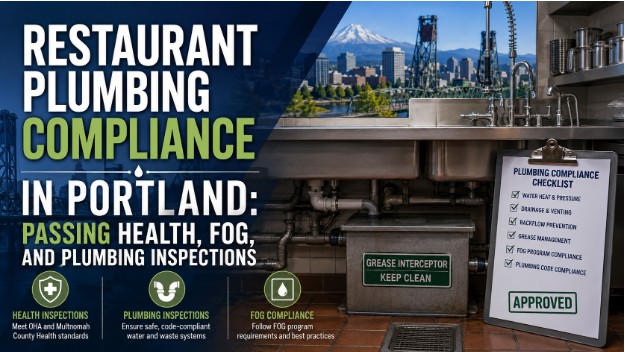
Portland restaurants must satisfy three separate plumbing-related compliance systems: Multnomah County Health Department licensing, the Bureau of Environmental Services’ grease interceptor program, and Portland Permitting & Development’s plumbing permit process.
Health Department plan approval must be obtained before the plumbing plan review even begins. Missing any one system can delay a restaurant’s opening or trigger enforcement independently of the other two.
Juggling three compliance systems at once is what stalls restaurant openings. Modern Plumbing coordinates restaurant plumbing compliance across all three — schedule a pre-opening consultation today.
Multnomah County requires every restaurant to be licensed and pass a pre-opening inspection before serving food to the public. Pre-opening inspections can take up to 5 business days to schedule once construction is complete and the license application is submitted.
Health Department plan approval must happen before Portland plumbing plan review even starts — the fixture layout plan needs a Health Department stamp or an Oregon Department of Agriculture approval letter before Portland Permitting & Development will review the plumbing plans.
This sequencing applies to any kitchen or restroom alteration, even projects that don’t touch plumbing at all.
If you’re ready to get started, call us now!
Multnomah County scores restaurant health inspections using three violation categories under Oregon’s Food Sanitation Rules. Environmental health specialists conduct these inspections twice a year, unannounced, and post the results publicly.
| Violation Category | What It Covers | Correction Requirement |
| Priority (P) | Direct connection to preventing foodborne illness | Often requires correction at the time of inspection |
| Priority Foundation (Pf) | Management actions, equipment, or procedures that control risk factors | May require immediate correction depending on the item |
| Core (C) | General sanitation, facility upkeep, and maintenance | Typically addressed on a standard timeline |
A cited handwashing sink violation illustrates how plumbing ties directly into this scoring: Oregon’s Food Sanitation Rules require handwashing sinks to deliver water at a minimum of 100°F through a mixing valve or combination faucet, and a sink failing that standard is logged as a Priority Foundation item requiring immediate correction.
Health Department plan review checks specific plumbing fixtures before approving a restaurant’s layout.
Required fixtures include a utility sink or a curbed cleaning facility, correctly plumbed hose bibs, and separate fixtures for hand washing and ware washing rather than a single shared sink.
Restaurants with 450 square feet or more of seating area also need separate restrooms for each gender, or correctly sized unisex restrooms as part of the same plan review.
Coordinating this fixture layout with a licensed plumbing contractor before submission reduces the chance that a plan will be bounced back for a missing utility sink or an undersized restroom fixture count.
If you’re ready to get started, call us now!
The grease interceptor program under ENB-4.26 runs on its own timeline, separate from Health Department licensing. A restaurant can pass its Health Department plan review and still face a 90-day HGI or 180-day GGI installation deadline once BES issues a retrofit notice, since Cut Through the FOG requirements attach to kitchen construction, remodeling, and ownership changes independently of health licensing.
Restaurants that consistently clean and report their grease interceptors also tend to score better on Core sanitation items during health inspections, since a poorly maintained interceptor contributes to the kind of plumbing-system disrepair inspectors cite directly.
Our companion guide on grease interceptor cleaning rules covers the 25% rule and reporting deadlines in detail.
No. Health Department licensing doesn’t substitute for backflow prevention or plumbing permit requirements — a restaurant needs to satisfy all three separately.
Mixed-use and food-service water connections commonly trigger the reduced-pressure assembly requirement, regardless of a restaurant’s health licensing status.
Restaurants also need their own commercial plumbing permit for any kitchen or restroom plumbing work, in addition to Health Department plan approval.
A restaurant opening in unincorporated Multnomah or Washington County should confirm which permitting office applies to that specific address before assuming the same office handles both cities.
Do I need Health Department approval before my plumbing permit is issued?
Yes. Multnomah County Health Department plan approval, documented by a stamp on the fixture layout plan, must happen before Portland Permitting & Development will review plumbing plans. This sequencing applies even to projects that don’t involve plumbing alterations.
How often does Multnomah County inspect restaurants?
Environmental health specialists conduct unannounced inspections twice a year under Oregon’s Food Sanitation Rules. Inspection frequency may increase for restaurants with prior violations or those serving higher-risk food categories under the county’s risk-based inspection approach.
What plumbing fixtures does the Health Department plan review require?
Plan review requires a utility sink or curbed cleaning facility, correctly plumbed hose bibs, and separate fixtures for hand washing and ware washing. Restaurants with 450 square feet or more of seating also need separate restrooms for each gender under the same review.
What temperature must handwashing sink water reach?
Handwashing sinks must deliver water at a minimum of 100°F through a mixing valve or combination faucet under Oregon’s Food Sanitation Rules. A sink that fails this standard is logged as a Priority Foundation violation, requiring immediate correction during inspection.
Does passing my health inspection mean my grease interceptor is compliant?
No. Grease interceptor installation deadlines and cleaning requirements run under a separate Bureau of Environmental Services program. A restaurant can pass its health inspection while still facing enforcement for a missed grease interceptor deadline or cleaning report.
Do I still need a backflow prevention assembly if I passed my health inspection?
Yes. Backflow prevention requirements come from the Portland Water Bureau, not the Health Department, and apply independently of health licensing status. Mixed-use and food-service connections commonly require a reduced pressure assembly regardless of inspection results.
How long does it take to schedule a pre-opening health inspection?
Scheduling a pre-opening inspection can take up to 5 business days once construction is complete and the license application is submitted. The restaurant’s first routine inspection typically occurs within a few weeks of the license being issued.
Do I need to notify Multnomah County if I change my restaurant’s menu?
Yes. Multnomah County requires restaurants to contact the Health Department if the menu changes or ownership changes, since either change can affect the facility’s licensing category, plan review requirements, or required county approvals before continuing normal service operations.
Coordinating three separate compliance systems shouldn’t fall entirely on restaurant ownership. Modern Plumbing handles the plumbing side of restaurant compliance across Portland — contact us before your next health or plumbing inspection.
Quick Links
Plumbing Services
SW Washington Service Areas
Oregon Service Areas