

Originally published: January 2026
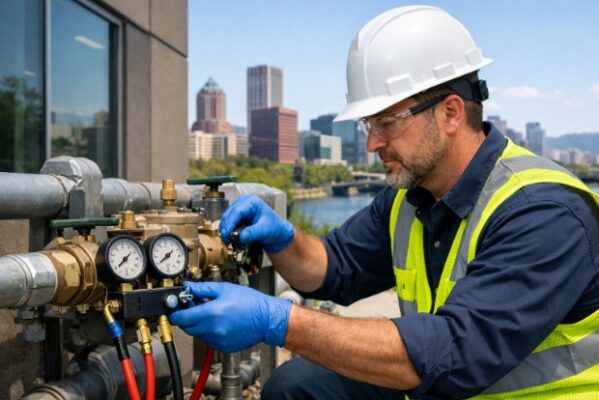
Portland businesses face strict rules regarding backflow testing. Many owners don’t realize how easy it is to get in trouble here.
If you skip your annual testing or forget to report the results, you could end up with fines—or even lose your water service. These headaches are totally avoidable if you know what’s expected.
Your business needs annual backflow testing by a certified professional, and you must report the results to the city within 10 business days to remain compliant.
Miss a deadline, and you could get hit with penalties that mess with your operations.
When you know which devices need testing, who’s allowed to do it, and how to handle the paperwork, you can actually avoid most of these issues.
Portland business owners must manage backflow prevention and other plumbing compliance requirements to keep operations running smoothly.
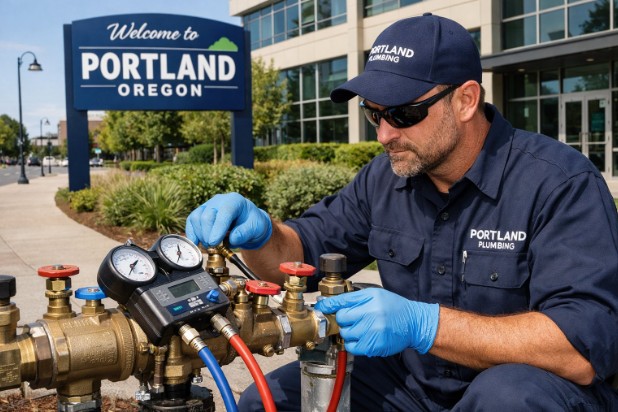
Backflow testing checks whether contaminated water can flow back into the clean drinking water supply through your business plumbing. Portland requires businesses to test their backflow prevention assemblies annually because the Oregon Health Authority requires all public water systems to maintain active cross-connection control programs.
Your business needs backflow prevention assemblies if your plumbing systems create cross-connections between potable water and potential contaminants.
A cross-connection occurs when your drinking water lines connect to anything that could introduce contaminants back into the main supply.
Systems that require backflow testing include:
Backpressure occurs when the pressure in your system exceeds the water supply pressure, forcing water back.
Backsiphonage is when negative pressure in the supply lines pulls contaminated water back into clean pipes.
Portland businesses need certified annual backflow testing to stay compliant with local regulations. Your water provider can shut off service or fine you if you skip required inspections.
Stay ahead of annual backflow deadlines with a simple compliance checklist and scheduled testing support—Schedule an appointment with Modern Plumbing.
If you’re ready to get started, call us now!

Oregon says you have to test your backflow prevention devices at least once a year. This annual backflow testing requirement applies to both commercial and residential properties with backflow assemblies.
You need to hire a certified tester with credentials from the Oregon Health Authority. When your tester finishes, they’ll create a test report showing if your device passed or failed.
Here’s the step people often forget: submit the test reports to the Portland Water Bureau after testing. The Water Bureau wants you to mail the test report to maintain compliance with your property.
Miss this reporting step, and you can still get in trouble—even if you did the test on time.
Your backflow testing calendar should always include both the physical test and the paperwork submission.
Key points to remember:
The Portland Water Bureau tracks which properties have turned in their annual backflow test results.
If your paperwork’s missing, you could get fined or lose service—even if you paid for testing. Set a reminder to follow up with your tester and confirm receipt of your reports.
Only people with proper certification from the Oregon Health Authority can legally test backflow prevention assemblies for your business. The state wants specific training and credentials before anyone does this work.
A certified backflow tester completes an approved training course that usually takes five days. You can’t just hire any plumber for this job.
The certification process is strict. Individuals must complete all requirements for testing backflow prevention assemblies in accordance with Oregon’s rules. That includes passing the training within 12 months of applying for certification.
Only two types of pros can do your backflow testing and certification:
Journeyman plumbers and apprentices can become certified testers, but must first complete the Authority-approved backflow assembly tester training course. A regular plumbing license doesn’t automatically qualify them.
Your business should always check that any backflow tester you hire holds a current Oregon certification. If you use someone uncertified, your test reports might not count—and you could get fined.
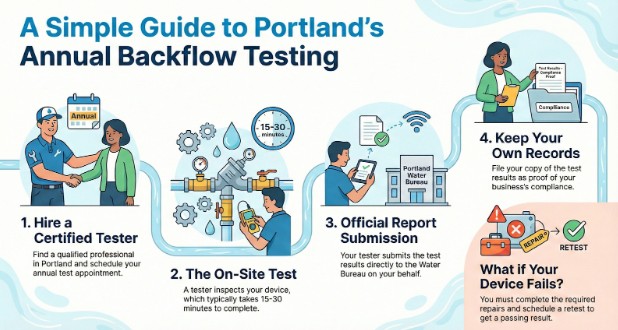
The backflow testing process starts when you hire a certified backflow assembly tester. Find a qualified, licensed backflow inspection professionalin Portland.
The Basic Testing Steps:
Most professional backflow testing appointments last about 15 to 30 minutes. You should receive a copy of your test results for your records.
If your backflow assembly fails, the tester identifies the required repairs. You must resolve the issues and schedule a retest before you can submit passing results to the city.
The backflow testing process in Portland follows a set protocol to ensure reliable results. Your business needs to do this annually to remain compliant.
Keep your test documentation somewhere safe. These records prove your business meets Portland’s water safety requirements.
Portland businesses usually see three main types of backflow prevention devices. Each one works differently and fits specific needs.
Reduced Pressure Zone (RPZ) devices give the highest level of protection. You’ll see them at high-hazard sites like hospitals, chemical plants, and anywhere that handles toxic stuff. RPZ assemblies have two check valves with a pressure-monitored chamber between them.
Double Check Valve Assemblies (DCVA) are good for medium-hazard locations. You’ll find these in office buildings, hotels, and retail stores. They use two check valves but omit the relief valve found in RPZ devices.
Pressure Vacuum Breakers (PVB) protect against back-siphonage only. They’re common in irrigation systems and outdoor setups. These can’t handle backpressure situations.
| Device Type | Protection Level | Common Uses |
| RPZ | High-hazard | Medical facilities, industrial sites |
| DCVA | Medium-hazard | Offices, restaurants, hotels |
| PVB | Back-siphonage only | Irrigation, outdoor systems |
The type of backflow preventer your business needs depends on your operations and local codes. If you use the wrong backflow prevention assembly, you’re putting your water supply at risk—and breaking the rules.
Install a device that doesn’t match your hazard level, and you could face liability issues.
Portland inspectors verify the correct device during annual testing. Businesses must install the right devices to pass inspection and maintain their certification.
Your building’s plumbing, how you use water, and the contamination risks you face all determine which backflow prevention device you need.
Need a backflow test, repair, or replacement plan? Book a site walkthrough with Modern Plumbing to confirm assemblies and documentation—Contact us today.
If you’re ready to get started, call us now!
A failed backflow test means your device isn’t protecting Portland’s water supply properly. You’ll need repairs or a replacement before you can pass a retest.
The key decision you’ll face is whether to repair your existing assembly or replace it entirely. That depends on your device’s age, the extent of the damage, and applicable local codes.
When your backflow assembly fails, a certified tester will outline the exact steps you need to take to regain compliance. You’ll have to weigh whether to repair or replace the unit based on a few key factors.
The device’s age comes first. If your assembly is over 10 years old, replacing it usually makes more sense than investing in repairs.
Cost comparison also plays a significant role. Fixing minor issues such as rubber seals or springs can cost $100–$300, while a full replacement can cost $500- $2,000, depending on the type and the complexity of the installation.
Severity of failure shapes your options. Small leaks or check valve problems? Those are usually fixable. Major failures that risk contamination require prompt action; replacement often makes more sense.
Local code updates sometimes require newer assembly types. Portland changes its rules now, and then, so older devices might not meet current standards even if you repair them.
Installing new backflow prevention assemblies in Portland usually requires permits through the city’s commercial permitting process. The rules depend on whether you’re adding a new assembly or just replacing an old one.
Commercial permits and inspections in Portland are generally required when installing a new backflow prevention assembly.
If you’re simply replacing an existing assembly with the same type in the same location, you may not need a new permit.
New installations always need a permit. That includes adding backflow devices to areas that never had them, or installing assemblies in new locations on your property.
Backflow assembly installation requirements in Portland are set by Oregon Administrative Rules 333-061-0070 and 333-061-0071.
These rules apply to both existing and new premises-isolation backflow prevention assembly installations throughout the Portland Water Bureau’s service area.
Honestly, your best move is to contact the Portland Bureau of Development Services before you start any backflow work. They’ll tell you if your project needs a permit.
Working with a licensed plumber who knows the local regulations can help you avoid delays and ensure your installation complies with city codes.
If you skip backflow testing, Portland’s water bureau can impose fines starting at $500. Fines increase with each violation, and your business remains on a non-compliance list until the issue is resolved.
Immediate Consequences You Face:
Service interruptions mean your business will be shut down until the water is restored. Restaurants can’t serve food. Medical offices can’t see patients. Manufacturing just stops.
The city tracks the testing schedule for every commercial property in its database. They send automated reminders, but if you miss the deadline, enforcement kicks in.
Your insurance may not cover water damage or liability claims if you failed to test your backflow device. That adds another layer of risk on top of city penalties.
What Staying Compliant Looks Like:
Stick to these steps, and you’ll keep your business running. Your water stays on, customers stay happy, and you avoid surprise costs that can wreck your budget.
The test itself usually takes less than an hour. Honestly, the cost of a single test is nothing compared to a single day of lost revenue if your water is shut off.
At Modern Plumbing, we help Portland-area businesses stay compliant with backflow requirements by coordinating testing, providing installation support, and maintaining systems—emphasizing downtime minimization and organized documentation.
We’re a strong fit for commercial properties with higher-risk or more complex water systems, including restaurants, medical offices, manufacturing facilities, and multi-tenant buildings.
We also support property managers with multiple locations by keeping testing schedules consistent and records easy to track.
Even smaller businesses benefit from professional support—if your property has a backflow prevention assembly, you need annual testing and clean documentation to stay on track and avoid compliance issues.
We provide clear service documentation and practical guidance on what to retain for audits and inspections, so you can stay compliant with fewer surprises and fewer interruptions.
Modern Plumbing helps Portland businesses manage backflow testing, repairs, and records so you avoid surprises and interruptions—Schedule service now.
How often do Portland businesses need backflow testing?
The Portland Water Bureau states that customers with backflow assemblies must hire a company to test them annually. Annual testing keeps your assembly verified, prevents compliance issues, and reduces the risk of service interruptions caused by unverified devices.
Where do we submit backflow test reports in Portland?
After testing is completed, the Portland Water Bureau instructs customers to mail the test reports to the Water Bureau. Submitting the report is a key compliance step—testing alone is not enough if your paperwork is missing or late.
Who is allowed to perform backflow testing in Oregon?
Oregon’s Cross Connection and Backflow Prevention program certifies Backflow Assembly Testers in the State of Oregon. Using a certified tester helps ensure your test is accepted and your records are defensible if questions arise during compliance checks.
What happens if a backflow assembly fails the test?
Portland guidance indicates that if an assembly is not working properly, it should be cleaned, repaired, or replaced immediately. Fast corrective action, along with retesting, helps maintain compliance and reduces the risk of operational disruption from unresolved device failures.
How long does backflow testing take for a typical business?
Most tests are relatively quick once the assembly is accessible, but total time depends on device type, number of assemblies, and site access. Delays usually come from blocked access, missing shutoff information, or repairs required after a failed test.
Do all businesses need a backflow preventer?
Not every business requires an assembly, but Portland notes that an assembly should be installed when there is an existing or potential cross-connection on the property. Many commercial systems create cross-connection risk through equipment, irrigation, or specialty water uses.
What backflow devices are most common in commercial buildings?
Commercial sites commonly use assemblies such as RPZ (reduced pressure zone), double-check valve assemblies, and certain vacuum breakers, depending on risk and application. Modern Plumbing also recommends installing RPZ-style backflow devices to prevent contamination from reverse-flow events.
Quick Links
Plumbing Services
SW Washington Service Areas
Oregon Service Areas