

Originally published: October 2025
![Sewer Line Replacement in Portland: Costs, Permits, and Trenchless Options [Expert Guide]](https://www.modernplumbingpdx.com/wp-content/uploads/2025/10/mp8-580x400.jpg)
Sewer line problems can quickly become expensive headaches for Portland property owners. Replacement often turns into one of the most important home maintenance projects you’ll face.
Most Portland homeowners pay between $4,613 -$8,378 for sewer line replacement. The price depends on pipe length, depth, and which replacement method you pick.
The city’s old infrastructure and quirky soil mean sewer issues pop up all over the metro area. It’s just one of those things you have to deal with eventually.
Portland tacks on extra permit requirements that bump up project costs. Starting July 2025, the city added a $295 inspection fee to the usual permit fees for sewer lateral repairs and new connections.
Property owners have to navigate these rules while deciding between traditional trenching and newer trenchless methods. Neither is exactly fun, but not all options are equal.
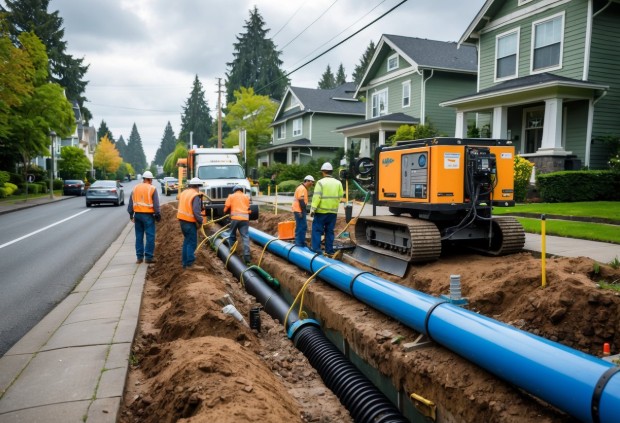
Portland properties need sewer replacement due to aging clay/cast-iron laterals, root intrusion, shifting soils, and strict city codes. Addressing issues early avoids backups and fines.
Many homes here went up decades ago with clay or cast-iron pipes. Those materials just don’t last forever—they crack and clog as they age.
All that rain puts extra strain on sewer systems. When the soil shifts during storms, underground pipes can break or move out of place.
Portland’s trees are beautiful but relentless. Their roots chase moisture and nutrients, often busting right into sewer lines and causing blockages.
Common Issues Portland Homeowners Face:
That clay-heavy soil expands and contracts as moisture changes. Pipes end up under a lot of pressure and can crack or separate at the joints.
During big rainstorms, Portland’s combined sewer systems get overwhelmed. Backups can damage the lines that connect your home to the main system.
Most folks only realize there’s a problem when they notice slow drains, weird sewage smells, or soggy patches in the yard. Not exactly pleasant discoveries.
Unsure if you need trenchless or traditional? Modern Plumbing performs camera inspections and cost comparisons so you can choose confidently. Schedule an appointment.
If you’re ready to get started, call us now!
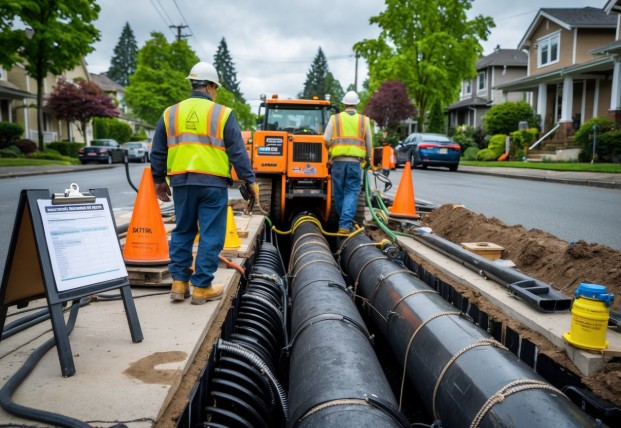
Portland requires a plumbing permit for private laterals and separate right-of-way permits when the work extends into city property—plus inspections at key stages and a 2025 inspection fee.
As a property owner, you’re on the hook for the private sewer lateral from your house to the edge of your property. That covers all pipes, connections, and repairs within your boundaries.
The city looks after the main sewer lines in the right-of-way and public spaces. You can’t touch those without special permission.
Construction, modification, repair, or removal of city sewer components requires a public works permit before you do anything. That rule covers any connection between your private lateral and the city’s mains.
Private contractors can handle work inside your property lines. But if they need to connect at the property line, they’ll need city permits for that too.
This boundary stuff gets important during replacement. Homeowners have to coordinate with the city if their lateral ties into the main system.
Anyone who needs to enter the city’s sewer or stormwater system has to apply for a permit through Environmental Services. The city reviews every application to protect public safety and keep the system working properly.
Portland requires several inspections during sewer work:
Sewer lateral repair and connection fees went up on July 1, with a new $295 inspection fee. Contractors have to book inspections ahead of time or risk delays.
As-built drawings must show the real pipe locations, depths, and what materials you used. The city wants these within 30 days after finishing the job.
If you work without the right permits, you’ll get hit with stop-work orders and daily fines. Portland will issue citations starting at $500 per violation.
Unpaid fines turn into liens against your property. You can’t sell or refinance until you clear those up.
If unpermitted work fails inspection, the city can force you to redo the whole system. That ends up costing way more than just getting the permits up front.
Portland’s building rules change all the time as the city grows and updates safety standards. Staying on top of requirements saves you from expensive mistakes.
Most people let licensed contractors handle permits and inspections. It’s just easier and helps avoid paperwork headaches and penalties.
Expect $4,600–$8,500 overall, or ~$50–$250/ft. Trenchless can price higher per foot, but often lowers restoration and downtime costs.
But plenty of factors can drive those numbers higher, especially if your property is tricky or you want premium materials.
Most Portland replacements land $4,600–$8,500. Per-foot ranges (~$50–$250/ft) vary by depth, access, soil, method, and restoration.
The pipe material you pick makes a big difference. PVC pipes run $120 to $320 for materials, while top-shelf cast iron can set you back $800 to $3,000 for 40 feet.
Deeper lines cost more to dig out. Anything below 6 feet means extra excavation and safety steps. If you’ve got rocky soil, add $15 to $30 per foot.
Tree removal costs anywhere from $500 to $2,000 per tree, depending on the size and how close it is to the line. Sometimes you have to take out the whole tree if the roots are a problem.
Landscape restoration can add $1,000 to $5,000 after old-school digging. Here’s what you might pay:
If your property is hard to access, expect costs to jump 20–40%. Tight spaces that need hand digging or special gear push prices over the usual $69 per foot max.
Traditional excavation takes 3–5 days and really tears up the place. Businesses lose parking, customers, and have to deal with noise complaints.
Trenchless methods can cost $60 to $250 per foot, but cut the job down to 1–2 days. The higher upfront cost usually means you don’t have to pay for as much restoration or lost business.
Commercial properties often get the most value from trenchless. If a restaurant closes for 3 days, it might lose $5,000–$15,000 in sales. Paying an extra $2,000–$4,000 for trenchless starts to look pretty smart.
Permit fees include a new $295 inspection charge starting July 1, 2025. That’s on top of the usual permit costs for lateral repairs and connections.
Emergency jobs can cost 50–100% more than planned work. If you’ve got sewage backing up, you don’t have time to shop around or wait for a deal.
Trenchless replaces the pipe via small access pits (pipe-bursting or CIPP), minimizing surface damage; traditional methods open a full trench for maximum access and alignment control.
Knowing how each one works and what you’re in for helps you pick the right approach for your place.
Trenchless sewer replacement uses some clever techniques to avoid major digging. The main options are pipe bursting and CIPP (Cured-in-Place Pipe) lining.
Pipe bursting pulls a new pipe through the old, broken one. A special head breaks up the damaged pipe as it drags the new pipe into place. You only need small holes at each end of the bad section.
CIPP lining pushes a resin-coated liner through the existing pipe. Workers inflate it and cure it with heat or UV light, making a new pipe inside the old one. This works best for pipes that are cracked but not totally collapsed.
Both options usually wrap up in 1–2 days. Crews get access through existing cleanouts or small holes, not big trenches.
Traditional sewer repair means digging trenches along the whole stretch of bad pipe. Workers remove soil, landscaping, and sometimes even concrete to get to the line for replacement or repair.
| Method | Typical Portland Cost (2025) | Time | Surface Impact | Best For | Watch-outs |
| Traditional dig-and-replace | ~$50–$200/ft (before restoration) | 3–7 days | High (driveways/landscaping) | Collapses, severe misalignment, full access | Restoration adds thousands |
| Trenchless (bursting/CIPP) | ~$70–$250/ft | 1–2 days | Low (two pits) | Under pavements, trees, and busy sites | Needs access & suitable host pipe |
| Typical total project | $4,600–$8,500 | — | — | Straight residential runs | Complex sites are price higher |
Trenchless methods save money when existing pipes run beneath landscaping, driveways, or trees by skipping expensive restoration work. That’s a relief if you’ve got a yard you care about.
A professional sewer inspection tells you which replacement method makes sense. Plumbers bring in camera equipment to get a close look at pipe conditions and the surrounding soil.
Camera inspection shows the damage, pipe material, and what’s happening inside. That camera catches cracks, roots, weird joints, and any collapse points hiding in there.
This info helps contractors figure out the right repair method. It’s a bit like detective work, honestly.
Soil stability testing checks if trenchless methods will actually work. Loose or unstable soil might not hold up to pipe-bursting equipment, and rocky spots can make trenchless installation a real headache.
Access point evaluation looks at cleanouts and entry points. Trenchless repairs need good access at both ends, or you’re probably stuck with traditional excavation.
During inspection, contractors measure pipe diameter, slope, and depth. These details matter for picking equipment and deciding if trenchless is even possible.
Sometimes, trenchless just isn’t going to cut it. Certain conditions make traditional excavation the better call.
Completely collapsed pipes can’t handle trenchless equipment. Pipe bursting needs enough structure left to guide the new pipe, so if the old line is crushed, you’re out of luck—full excavation is the only real option.
Severe pipe misalignment makes trenchless installation a mess. When pipes have shifted a lot or the joints are way off, traditional methods let you fix the alignment properly.
Extreme slope conditions or unstable terrain can make trenchless work risky. Steep grades, loose soil, or a tangle of underground utilities usually mean you’ll need to dig the old-fashioned way for safety’s sake.
Very old clay or cast iron pipes sometimes shatter during trenchless work. In those cases, traditional replacement is just safer and more reliable.
Limited workspace around access points can block trenchless equipment. Traditional digging works better when you just can’t get the machines in the right spot.
Need fast, code-compliant sewer work? Modern Plumbing PDX specializes in trenchless and traditional replacements tailored for Portland properties. Schedule your appointment now and avoid costly delays.
If you’re ready to get started, call us now!
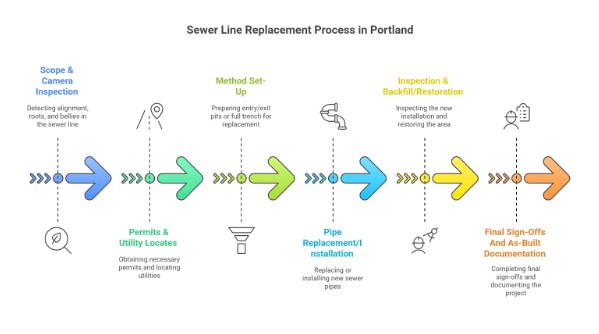
Replacing a sewer line in Portland takes a few clear steps: camera inspection, permits, excavation or trenchless setup, pipe installation, and final city approval.
Each step has its own quirks, especially with Portland’s rules and the local environment.
Contractors always start with a video inspection of your sewer line. This camera runs spots exactly where damage is hiding—roots, sags, misaligned joints, whatever’s lurking down there.
The camera shows the pipe’s condition from your house all the way to the main sewer. Contractors can pinpoint trouble spots like collapsed areas, nasty root blockages, or sections where the pipe’s sunk below grade.
This process tells you if you need a partial replacement or a full install. Root damage is common in old clay pipes, but if you’ve got newer PVC, sometimes a spot repair is all you need.
They measure the exact depth and length of the damaged part. They’ll also check for any connections, like basement drains or extra building tie-ins.
Straight runs with just a bit of damage are perfect for trenchless. If the line’s a wreck, though, you’ll probably need a full dig.
Portland makes you pull specific permits for sewer repairs and new hookups. Contractors have to get Utility Repair (UR) or Utility Connection (UC) permits before anything happens.
The permit application covers where you’ll work, how, and when. City staff check these to make sure you’re playing by the rules and not trashing the environment.
Oregon law says you have to call 811 at least 48 hours before digging. Utility locates mark gas, electric, and water lines so you don’t hit something expensive (or dangerous).
If you’re working in the right-of-way, there are extra hoops. The city might want traffic control, safe pedestrian paths, and a restoration bond in case you wreck public property.
Permit fees swing a lot based on how big the project is. Simple fixes cost less than full replacements that tie into the street sewer.
Setup depends on which method you’re using. Trenchless repairs just need a couple of small pits instead of a giant trench.
Traditional excavation means digging a trench from your house to the main. It’s not subtle, but sometimes it’s the only way—especially if your landscaping is already a mess or you’ve got a busted driveway to fix.
Trenchless methods use two small pits, one by the house and one at the street. This saves your lawn, driveway, and walkways from getting torn up.
For deeper holes, contractors add shoring to stop cave-ins. Portland’s clay soil can be tricky, so they usually have to take extra safety steps.
If they hit groundwater, they set up pumps to keep things dry. Mud makes everything harder, so drainage is key.
They also need space for equipment, new pipe, and dirt piles. Good contractors let neighbors know about any temporary access issues, so no one’s surprised.
Most new sewer lines in Portland use PVC or ABS plastic. These materials fight off roots and last for decades—50 years is pretty standard.
Contractors grade the new pipe carefully so waste flows the right way. The slope needs to be just right—too steep and water outruns solids, too flat and you get clogs.
They tie the new line into your house plumbing and the city’s main. Special fittings stop leaks and keep roots from sneaking in.
Trenchless installation usually means pulling or pushing the new pipe through the old route. It’s fast—sometimes done in a day—and barely messes up your yard.
Traditional installs lay pipe in the trench with a bed of sand or gravel. That bedding protects the pipe and keeps it stable.
Every joint gets leak-tested before they fill things back in. Contractors also add cleanouts where needed for future maintenance (because, let’s face it, you’ll want easy access next time).
City inspectors check the new line before anyone covers it up. They look at the pipe’s grade, connections, and materials to make sure everything’s up to code.
Inspectors confirm cleanouts are where they should be and that the main connection matches city specs. Once you get the green light, contractors backfill the hole in layers, packing it down to avoid future settling that could mess up your driveway or foundation.
Surface restoration puts things back the way they were—or better. That means replacing concrete, asphalt, landscaping, and anything else the job disturbed.
Most contractors give a warranty on restoration. They’ll tidy up all debris and leftover materials before calling it done.
Some settling can happen over the first few months. Good contractors will come back to fix minor dips or issues during the warranty period—just ask if you notice anything weird.
Portland wants a final record showing exactly where your new sewer line is and what it’s made of. This as-built documentation goes into the city’s permanent files.
The paperwork lists pipe depth, material, connection spots, and any changes from the original plan. Keeping this stuff accurate helps future contractors find the line if you ever need repairs or upgrades.
Contractors turn in final inspection reports and photos of the finished work. The city updates its sewer maps and maintenance logs with this info.
Property owners get copies of all permits, inspections, and as-built drawings. You’ll want these for your records, and they make life easier if you ever sell the place.
Once everything checks out, the city gives final approval. That closes the permit and confirms you’re good to go by Portland’s standards.
Some projects need follow-up inspections after a few months to make sure everything’s still solid. Contractors stay on the hook for warranty items during that time, so don’t be shy about calling if something seems off.
Replacing a sewer line in Portland can involve lots of city permits, restoration costs, and sometimes business downtime that blows up your original budget. Knowing all the cost factors helps you plan better and avoid ugly surprises.
You’ll need several permits in Portland for sewer work. A standard plumbing permit runs $150-$400, depending on how much you’re doing.
Right-of-way permits tack on $200-$800 if you’re working in city easements or streets. Excavation permits come in at $100-$300 for digging.
Other Portland permit fees can include:
It’s smart to budget $1,000-$4,000 for all permits. Commercial jobs usually cost more, thanks to a bigger scope and extra safety needs.
Traditional excavation means you’ll be fixing up your property afterward. Replacing a concrete driveway in Portland costs $8-$15 per square foot.
Sidewalks cost $6-$12 per square foot. Asphalt’s a bit cheaper, usually $3-$7 per square foot.
For landscaping, expect:
Trenchless methods can save you $3,000-$10,000 on restoration since you’re not tearing up as much. If your pipes are accessible, it’s worth considering trenchless just for the savings alone.
Commercial properties take a big hit with revenue losses during traditional sewer line replacement. Restaurants might lose anywhere from $2,000 to $8,000 a day if they have to close for excavation.
Retail shops see revenue drop by 40-70% when construction disrupts their flow. Office buildings deal with tenant complaints and sometimes even lease violations.
Downtime factors to keep in mind:
Trenchless replacement cuts business disruption from 5-10 days down to just 1-3. That shorter timeline really helps keep losses in check and keeps customers from drifting away.
Older Portland neighborhoods throw plenty of curveballs during sewer projects. Roots can sneak in and force you to buy more pipe than you planned for.
If a pipe collapses, material costs can jump by 20-40%. Tight spaces or big old trees might mean you have to rent special equipment, which isn’t cheap.
Common unexpected expenses:
It’s smart for property owners to set aside an extra 15-25% as a contingency fund. If your building went up before 1970, you’ll probably want to budget even more for surprises.
Plenty of Portland contractors offer flexible payment plans for these big sewer jobs. Some businesses go for phased replacement, spreading the cost over 6-18 months so they can keep running.
Maintenance contracts help with budgeting, usually costing $200-$800 a year. They often include priority service and discounted repairs, which is honestly a relief when things go wrong.
Financing options available:
Business owners often negotiate milestone-based payments tied to project progress. That way, they manage cash flow and avoid getting burned if a contractor flakes out.
| Cost Bucket | Typical Range | Notes |
| Plumbing permit | $150–$400 | Private lateral scope |
| ROW/UR/UC permits | $200–$800 | Traffic control may apply |
| 2025 inspection fee | $295 | Add to the above permits |
| Driveway restore | $2,000–$4,000 | Concrete/asphalt |
| Landscaping restore | $1,000–$5,000 | Lawn, beds, irrigation |
| Contingency | 15–25% | Older/pre-1970 homes: higher |
Finding the right contractor for sewer line replacement takes some digging. Portland has a ton of top-rated sewer contractors, each with their own specialties and quirks.
Start by reading customer reviews on a few different sites. You want to spot sewer line repair pros who keep racking up solid feedback.
Every contractor needs the right licenses and insurance. Portland’s got strict permit rules for sewer work—no way around it if you want things safe and legal.
Gather estimates from at least three contractors. That’s the best way to sniff out fair pricing and see how each one would tackle your project.
Key Questions to Ask:
Pick contractors who really know the local codes. Portland has its own sewer regulations that contractors need to follow.
Some companies stick to methods like trenchless repair. Others handle the whole package, offering complete sewer installation and replacement services.
It’s smart to consider contractors who handle emergencies. Sewer issues don’t exactly wait for a good time to show up.
Modern Plumbing delivers expert sewer line replacement in Portland with clear pricing and trenchless options. Protect your property today—Contact Us to schedule service.
How much does sewer line replacement cost in Portland in 2025?
Sewer line replacement in Portland typically costs $4,000–$8,500, or $60–$250 per foot, depending on method, access conditions, and restoration requirements.
Do I need a permit to replace a sewer line in Portland?
Yes. Portland requires a plumbing (PT) permit for property-side work and a UR/UC permit for right-of-way excavation, with inspections before sign-off.
What is the difference between trenchless and traditional sewer replacement?
Traditional methods dig a full trench, while trenchless use small access pits to burst or line pipes. Trenchless reduces surface damage but isn’t always feasible.
How long does sewer line replacement take in Portland?
Most residential replacements take 1–3 days, while larger or complex projects may require up to a week, depending on permits, depth, and restoration needs.
Can trenchless sewer replacement save money?
Yes—while trenchless has a higher base cost, it often saves thousands in landscaping, driveway, and pavement restoration, making it cost-effective long term.
What signs mean I need a sewer line replacement?
Frequent backups, foul odors, soggy patches in the yard, gurgling drains, or old clay/cast-iron pipes often signal that replacement is needed.
How often should sewer lines be inspected in Portland?
Experts recommend a camera inspection every 3–5 years in older Portland properties, or annually for businesses with heavy water/grease usage.
Quick Links
Plumbing Services
SW Washington Service Areas
Oregon Service Areas