

Originally published: October 2026

Reviewed by: Modern Plumbing Co., a Tualatin, Oregon plumbing company owned by one family for four generations, for commercial plumbing systems and Portland permit practice.
Plumbing clauses in a commercial lease are the provisions that decide who maintains, repairs, replaces, and pays for the water, drain, and sewer systems serving a leased space.
Most of the cost sits in seven clauses: delivery condition, repair and maintenance, replacement and capital, alterations, Portland riders, emergency access and insurance, and surrender.
Each one determines whether a failed water heater, a blocked shared drain, or a new commercial plumbing installation becomes a landlord or tenant expense.
Plumbing nobody inspected before signing can become the tenant’s bill. Modern Plumbing Co. offers a Portland walkthrough of existing systems before build-out plans are final.
Seven lease provisions shape most commercial plumbing costs. Each is a negotiation topic, not a mandatory term.
| Clause | What It Should Specify | Cost Risk When Missing |
| Delivery condition | Plumbing condition at commencement; defect notice window | Disputes over pre-existing leaks |
| Repair and maintenance | Which components each party maintains and repairs | Every failure becomes a negotiation |
| Replacement and capital | Who replaces water heaters, risers, and sewer lines | Unplanned capital costs |
| Alterations | Licensed contractor, permits, plan approval, ownership | Unpermitted work and move-out disputes |
| Portland riders | Grease interceptor, backflow, and sewer cost sharing | Confusion when the City enforces |
| Emergency access and insurance | Entry rights, shutoff authority, water damage coverage | Slow response and uncovered losses |
| Surrender | Remove, cap, or leave tenant plumbing | Restoration costs after the lease ends |
Tenants who cannot negotiate every clause should prioritize system condition, repair responsibility, capital exposure, and alteration approvals, in that order. Property managers can fold tenant-side duties into a maintenance program.
A delivery condition clause should state the plumbing’s condition at commencement and give the tenant a set number of days to report defects. A pre-lease inspection supplies the evidence that clause relies on.
A delivery condition clause is a lease provision that fixes the premises’ physical condition on the commencement date.
An as-is clause addresses the tenant’s acceptance of the condition, separate from who repairs a later failure. Landlord representations, disclosure duties, and Oregon law can all affect what an as-is clause transfers, so an attorney should review that language.
Modern Plumbing Co. verifies these items before renovation drawings are finalized, and the same list works before signing:
An inspection records condition on one date. Camera footage covers accessible drain lines, not every pipe inside finished walls, and no inspection decides who pays. Tenants planning a build-out can extend the review to existing building systems.
Repair, maintenance, and replacement are different kinds of work, and the lease decides who pays for each. Defining each term by component helps keep capital costs out of disputes.
| Work Type | Plumbing Examples | Who Pays Depends On |
| Routine maintenance | Clearing fixture drains, replacing washers and flush valves | Whether the component serves only the premises |
| Repair | Fixing a leaking branch line or a failed heating element | Component assignment and any per-incident cost cap |
| Replacement | A new water heater, riser section, or sewer line | Replacement wording and operating-expense provisions |
| Capital improvement | Building repipe, new backflow assembly, sewer lining | Capital expense terms, including any negotiated amortization |
Consider a hypothetical aging water heater serving one suite. Where the tenant repairs and replaces all premises equipment, the tenant funds commercial water heater replacement. Where the tenant only repairs, the landlord pays, and an operating-expense clause may pass part of that cost back.
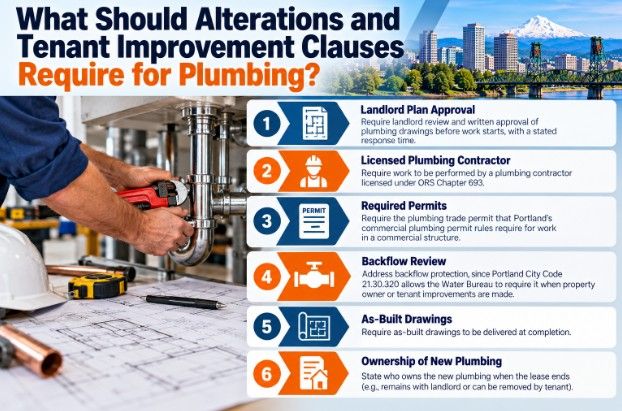
An alterations clause should require landlord plan approval, a licensed contractor, the permits Portland requires, and clear ownership of new plumbing.
A tenant improvement is a build-out or modification that fits leased space to one tenant’s operations. The plumbing terms should include:
Unpermitted build-out plumbing can delay occupancy. Modern Plumbing Co. pulls the plumbing trade permit and manages the inspection sequence for Portland commercial projects.
If you’re ready to get started, call us now!
Portland law assigns some backflow, grease, and sewer duties directly. A rider cannot shift those legal duties, but it can set who performs the work and who reimburses the cost.
Portland’s Bureau of Environmental Services inspects grease interceptors, sets cleaning frequency, and takes enforcement action against a food service establishment that causes a grease obstruction in the City sewer. A rider can assign who hires the pumper, keeps records, and funds a replacement unit. Incoming restaurant tenants should confirm the existing unit meets grease interceptor requirements.
Under City Code 21.30.320, the property owner must maintain required backflow protection, and a state-certified tester must test each assembly at least yearly and after installation, relocation, or repair. The code places those costs on the property owner, plus the assembly owner if different; a lease can only add tenant reimbursement on top.
Under Portland City Code 17.32.070, the parties served maintain private sewer systems. For City-accepted laterals, the City maintains defined segments, and the property owner maintains the rest.
A rider can then divide camera inspections, line clearing, and repair costs between landlord and tenant.
These clauses determine how quickly a leak is stopped, who absorbs water damage, and what plumbing stays when the lease ends.
Posting shutoff valve locations in an emergency response plan helps staff stop leaks fast. Emergency terms should allow the landlord to enter to stop an active leak and the tenant to call a licensed plumber when the landlord is unreachable.
Insurance terms should state whose policy covers water damage to inventory and finishes and whether the parties waive subrogation. Surrender terms should say whether the tenant removes added fixtures, caps abandoned lines at the source, or leaves plumbing in place.
A plumbing contractor checklist helps confirm licensing, insurance, and written scope for restoration work. An Oregon commercial real estate attorney should review any plumbing language that assigns liability.
What plumbing clauses should a commercial tenant look for?
A commercial tenant should look for a delivery condition warranty, repair and maintenance terms by component, replacement and capital cost terms, alteration requirements, emergency access, insurance, and surrender terms. Restaurant and mixed-use tenants in Portland should also look for grease, backflow, and sewer riders.
What does an as-is clause mean for plumbing in a commercial lease?
An as-is clause generally means the tenant accepts the plumbing in its current condition, but the full lease, any landlord representations, disclosure duties, and Oregon law shape what that acceptance covers. Tenants benefit from a pre-lease inspection and an attorney’s review before signing.
Who pays to replace a water heater in a commercial lease?
The lease determines who pays to replace a water heater, and the answer depends on the replacement language, the specific unit, and any operating-expense provisions. Some leases assign all premises equipment to the tenant, while others treat replacement as a landlord capital cost.
Who must pull the plumbing permit for a Portland tenant improvement?
Portland requires a licensed plumbing contractor to buy the permit and perform the work when a business operates in a commercial structure. The lease alterations clause should require that permit, landlord plan approval, and as-built drawings when the plumbing work is complete.
Can a build-out trigger a backflow requirement in Portland?
Yes. Portland City Code 21.30.320 allows the Water Bureau to require backflow protection when property owners or tenants make improvements. New break rooms, coffee systems, or kitchen equipment can create cross-connections, so the lease should assign installation and annual testing costs.
What should a grease interceptor rider include?
A grease interceptor rider should set the pumping schedule, name who hires the pumper and keeps service records, and assign replacement cost for a failed unit. The rider cannot shift City enforcement, which Portland directs at the food service establishment causing a grease obstruction.
What happens to tenant-installed plumbing when a commercial lease ends?
The surrender clause determines whether tenant-installed plumbing stays, is removed, or is capped. Without clear terms, landlords and tenants can dispute restoration costs, so the lease should specify capping standards for abandoned lines and who pays for restoring finishes after removal.
What can a pre-lease plumbing inspection show?
A pre-lease plumbing inspection shows the condition of accessible drains, supply lines, valves, and water heating equipment on the inspection date. It cannot see every pipe inside finished walls, guarantee remaining service life, or decide which party pays under the lease.
A pre-lease inspection documents plumbing condition, while an attorney reviews what the lease transfers. Lease wording decides who pays for repairs, replacements, and capital work, so define each term by component. Portland law sets backflow, grease, and sewer duties directly, and lease riders only divide the work and cost between landlord and tenant.
Lease negotiations move faster when plumbing facts are documented. At Modern Plumbing Co., a live person answers the phone to schedule a plumbing walkthrough.
Quick Links
Plumbing Services
SW Washington Service Areas
Oregon Service Areas