

Originally published: October 2025 | Updated: December 2025

Portland business owners juggle tricky plumbing compliance rules that can lead to hefty fines or business interruptions if they slip up.
Business owners have to manage ADA accessibility, backflow prevention, and regular inspections to stay legal and keep everyone safe.
The Portland building codes set the bar high for commercial plumbing, asking for more than just working pipes and drains.
Plenty of business owners only spot compliance issues after they get a violation notice or during a plumbing emergency.
Commercial plumbing permits and inspections are required for nearly all plumbing work, and the steps can get complicated fast.
When you understand these requirements, you can sidestep sudden shutdowns and expensive retrofits. It’s not exactly fun, but it’s necessary.
Building a checklist and sticking to it helps cover all the bases. Backflow prevention devices need yearly checkups from certified pros, and ADA rules shape how restrooms and fixtures get set up.

Portland businesses can get hit hard—financially and operationally—if they ignore plumbing regulations.
Non-compliance can lead to fines, forced closures, or even lawsuits, putting property owners, facility managers, and tenants at risk.
Portland cracks down on businesses that break plumbing rules. The city issues steep fines for code violations, and those costs can show up seemingly out of nowhere.
Sometimes, the city shuts down facilities if plumbing problems threaten health or safety. That’s not something any business wants to deal with.
Legal liability is another headache. Property owners end up on the hook for damages if bad plumbing causes:
Insurance might not pay out if a business runs with non-compliant plumbing. That means owners could face the full bill for any accidents or damages.
Plumbing failures can shut down businesses on short notice. Restaurants lose money when inspectors find problems. Retail stores can’t stay open if the water stops working.
Downtime costs can pile up fast:
Customers notice plumbing issues—and they talk about it. Bad reviews about dirty bathrooms or accessibility problems spread quickly online.
Negative news coverage about health or safety violations sticks with a business for years. People remember those stories, and word gets around.
Property owners ultimately carry the responsibility for plumbing compliance. They need to make sure everything’s up to code before leasing space out.
Facility managers handle day-to-day upkeep and schedule regular inspections. They work with licensed plumbing contractors to keep things in line.
Tenants also have a role, depending on the lease. Many commercial leases say tenants must maintain plumbing fixtures and report issues right away.
Everyone needs to communicate clearly to avoid compliance messes. Owners should give tenants written documentation about plumbing conditions and maintenance schedules.
From restaurants to offices, Portland businesses trust Modern Plumbing PDX for proactive plumbing compliance. Ensure safety, accessibility, and efficiency—Contact Us now to get started.
If you’re ready to get started, call us now!
Portland businesses have to follow both federal ADA standards and Oregon state accessibility laws for their plumbing fixtures.
These rules cover measurements for toilets, sinks, grab bars, and floor space—so people with disabilities can use the facilities too.
Title III of the ADA covers businesses and public spaces in Portland. Restaurants, stores, hotels, offices—pretty much anywhere the public goes—fall under these rules.
Owners need to pay attention to both federal and state requirements when planning. These rules apply whether you’re building new, renovating, or operating in an older building.
ADA-compliant bathrooms have to meet design and installation standards for both commercial and public buildings. Building officials won’t approve projects that fall short of the 2010 ADA Standards.
Some places—like private clubs, religious groups, or certain residential buildings—might have different requirements. But most Portland businesses need to make sure their plumbing facilities work for people with mobility challenges.
Toilet Requirements:
Sink Specifications:
Grab Bar Standards:
Clear Floor Space:
| Fixture Element | Requirement | Measurement |
| Toilet Height | Seat top to floor | 17-19 inches |
| Toilet Clear Space | Floor area | 30″ x 48″ minimum |
| Toilet Centerline | Distance from the wall | 16-18 inches |
| Sink Counter | Maximum height | 34 inches |
| Sink Knee Space | Clearance underneath | 27 inches minimum |
| Side Grab Bar | Length | 42 inches minimum |
| Rear Grab Bar | Extension past the centerline | 12 inches |
| Grab Bar Height | Above floor | 33-36 inches |
| Door Width | Clear opening | 32 inches minimum |
| Turning Space | Wheelchair clearance | 60 inches in diameter |
Incorrect Toilet Height: A lot of older toilets are too low—just 15 or 16 inches. Swap in comfort-height toilets or use seat risers to hit the 17-19 inch mark.
Missing or Improper Grab Bars: Decorative bars might look nice, but they often can’t hold enough weight. Go with ADA-compliant grab bars rated for 250 pounds, and mount them at the right height.
Insufficient Clear Floor Space: Tight bathrooms block wheelchair access. Remove extra fixtures or widen the space to get at least 30 by 48 inches of open area.
Non-Compliant Sink Installation: Tall sinks can block wheelchair users. Lower the counter to 34 inches max and make sure there’s 27 inches of knee space underneath.
Door and Hardware Issues: Heavy doors or round knobs slow people down. Install lighter doors with lever handles and make sure openings are at least 32 inches wide.
Portland’s water system protection rules require certain businesses to install backflow assemblies and test them every year. Property owners risk water shutoffs and fines if they skip these steps.
The Oregon Health Authority says public water systems have to maintain active backflow prevention programs. So, some Portland businesses need to install these devices.
Industrial facilities need backflow assemblies if they use chemicals, dyes, or other substances that could pollute the water supply. Manufacturing and processing plants usually fall here.
Irrigation systems need protection if they connect to drinking water lines. Landscapers and businesses with automatic sprinklers need assemblies to keep fertilizers and pesticides out of the water people drink.
Fire suppression systems usually need backflow prevention, but residential multi-purpose fire suppression systems with potable piping don’t under Oregon’s code.
Multi-tenant buildings often need assemblies to prevent cross-connections between units or spaces. Apartment complexes and mixed-use buildings are common examples.
The rules can change by jurisdiction and depend on your plumbing setup and what kind of contaminants might be present.
Commercial customers need to get backflow devices inspected every year by certified professionals. The Portland Water District sends out reminder letters before those inspection deadlines sneak up.
Certified testers have to hold credentials from the New England Water Works Association, American Backflow Prevention Association, or American Society of Safety Engineers. Only these professionals can legally handle the required inspections.
Testing schedule runs on a 12-month cycle from your last inspection date. Business owners can’t just skip or delay annual testing—if they do, they’ll face penalties.
Documentation requirements call for detailed test reports that prove assemblies work as designed. Certified technicians handle compliance reporting so businesses can avoid fines.
The Portland Water Bureau enforces strict rules that match the Oregon state plumbing codes. Certified professionals must do all testing and maintenance, then submit reports to local authorities.
Installing backflow assemblies means you need the right permits from Portland.gov’s building department. Business owners have to get a plumbing permit before starting work.
The plumbing permit application asks for detailed plans showing where the assembly goes and its specs. Installation can change system pressure and flow, so plan carefully.
Clearance requirements make sure there’s enough room around assemblies for technicians to access all sides. Without good access, maintenance, and testing, it gets tricky fast.
Code compliance means following both State and City rules for how the system operates. The water user and installer both carry responsibility for getting it right.
You might also need a building permit if installation gets complicated or requires structural changes for the assembly.
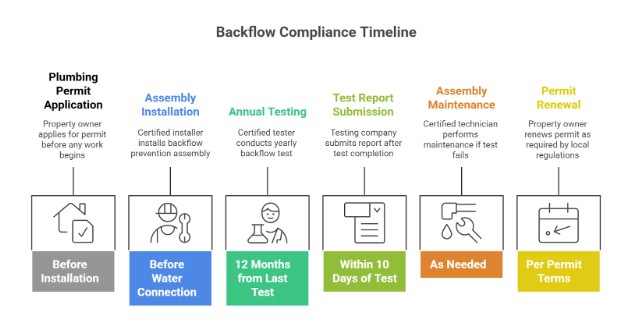
| Action Item | Frequency | Responsible Party | Deadline |
| Assembly installation | One-time | Certified installer | Beforethe water connection |
| Plumbing permit application | One-time | Property owner | Before installation |
| Annual testing | Yearly | Certified tester | 12 months fromthe last test |
| Test report submission | Yearly | Testing company | Within 10 days of the test |
| Assembly maintenance | As needed | Certified technician | When the test fails |
| Permit renewal | As required | Property owner | Per permit terms |
Water service disconnection is the fastest way the city enforces compliance. The Portland Water Bureau can shut off water to properties lacking backflow protection or current testing.
Financial penalties add up quickly if you ignore deadlines. Late testing fees might start small, but they don’t stay that way for long.
Code violations put property owners at legal risk. City inspectors can issue citations, forcing immediate fixes and sometimes court appearances.
Insurance complications can pop up when properties don’t meet code. If contamination happens at a non-compliant site, coverage disputes are likely.
Business disruption hits hard after water shutoffs, sometimes forcing temporary closures. Property owners and facility managers hold the responsibility for keeping backflow systems in check.
Regular plumbing inspections help commercial spaces stay up to code and avoid expensive repairs. Portland businesses need a set inspection routine and solid documentation to keep things running smoothly.
Commercial buildings need a thorough look at critical plumbing systems. Water leakage checks are the first step in good maintenance programs.
Primary inspection areas include:
Portland’s weather brings its own headaches for plumbing. Businesses should pay close attention to exterior pipes and underground lines that deal with freeze-thaw cycles.
Routine plumbing maintenance relies on regular inspections to keep systems in shape. Documentation matters—especially when inspectors or insurance companies come knocking.
Monthly inspections should cover:
Quarterly inspections require:
Annual inspections must include:
Businesses should keep thorough records of all inspections, repairs, and certifications. Digital logs make it way easier to track schedules and pull up info during audits.
Commercial plumbing maintenance checklists keep inspections on track. Each point on the list needs specific actions and proper documentation.
Daily Actions:
Weekly Actions:
Monthly Actions:
Quarterly Actions:
Commercial plumbing permits in Portland require professional installation and inspection. Licensed contractors know the local codes and what compliance actually means in practice.
Working with professionals brings real advantages. Contractors stay up-to-date on Portland’s changing plumbing regulations and inspection details.
Key benefits include:
Unexpected plumbing issues can cost businesses thousands in repairs and downtime. Qualified contractors catch problems early and keep things running with regular maintenance.
Businesses should always check contractor licenses, insurance, and Portland-specific experience. Having a trusted plumbing pro on call makes life easier and keeps service quality consistent.
Need peace of mind with plumbing compliance? Modern Plumbing PDX provides ADA audits, backflow testing, and full inspection services. Stay ahead of code issues—Schedule your appointment.
If you’re ready to get started, call us now!
Building a compliance program takes some planning and organization. Portland business owners need to figure out their facility’s needs, set up maintenance schedules, and create systems for tracking compliance activities.
Business owners should start with a thorough look at their building’s plumbing setup. This audit helps spot every fixture, system, and possible compliance issue hiding in the facility.
The inventory process begins with mapping out all plumbing fixtures. Owners should jot down restroom locations, kitchen sinks, water fountains, and any special equipment hooked up to water systems.
Key inventory items include:
Cross-connection checks are critical in this step. Owners need to find any spot where drinking water lines connect to non-potable sources or equipment.
Common cross-connections show up in dishwashers, boilers, irrigation, and manufacturing gear. Each needs documentation for backflow device installation.
The audit should also check if the building meets current ADA standards. Measurements and photos help spot fixtures that need updates or replacement.
Portland businesses need to set up a maintenance calendar that tracks all required inspections and testing dates. Local rules set different compliance schedules for each plumbing system.
Typical inspection frequencies:
| System Type | Test Frequency | Notes |
| Backflow preventers | Annually | Must use a certified tester |
| Cross-connection surveys | Every 3-5 years | Required for commercial properties |
| Plumbing permits | As needed | New installations or major repairs |
| ADA compliance reviews | After renovations | Triggered by building modifications |
Owners should schedule inspections 30-45 days before expiration. This gives enough time to fix any issues found during testing.
The calendar needs to keep track of several contractors and service providers. Most businesses use digital scheduling tools that send reminders for upcoming inspections.
Portland’s weather can mess with your schedule, especially during winter. Outdoor backflow devices need protection from freezing, so you might want to plan for extra winter inspections.
Portland only allows certified professionals to handle plumbing compliance work. Business owners should check that contractors have the right licenses and insurance.
Backflow testing requires a special certification from the Oregon Health Authority. These techs go through specific training and need to keep their credentials up to date.
Contractor qualification checklist:
It’s smart to have relationships with more than one qualified contractor. Backup providers can save you from headaches if your first-choice contractor isn’t available.
Review past inspection reports and testing methods during the selection process. Good contractors share thorough documentation and explain any problems they find.
Prices jump around between companies, but the cheapest bid isn’t always the best deal. Contractors with proper certifications help protect your business from violations and fines.
Effective compliance programs depend on solid record-keeping that tracks all maintenance and inspection results. Portland businesses have to keep detailed documentation for regulatory reviews.
Digital filing systems make it much easier to organize compliance records. Scan any paper documents and keep them in clearly labeled folders.
Essential documentation includes:
Include dates, contractor info, and details of the work for each record. Photos help show proof of compliance and the condition of your systems.
Make sure you can pull up your documentation quickly during inspections. Organized records show officials that you’re on top of compliance.
Cloud-based storage works well for businesses with more than one location. Authorized staff can get to records remotely and share them with contractors when needed.
Most compliance records need to stick around for 3-5 years. Set up automatic backups so you don’t lose anything important.
Compliance plans need regular updates to keep up with new regulations, building changes, and business shifts. An annual review helps you stay in line with Portland’s requirements.
Business changes like tenant improvements, new equipment, or operational tweaks can trigger new compliance needs. Any plumbing changes might bring fresh obligations.
Review triggers include:
During the annual review, check all your documentation for gaps or outdated information. Update contractor contacts and make sure their certifications are current.
City and state agencies change rules from time to time. Keep an eye on updates from Portland’s Bureau of Development Services and the Oregon Health Authority.
Use the review to see if your compliance process works well. Adjust your schedule, switch contractors, or tweak your documentation system as you learn what works (and what doesn’t).
Facility Assessment:
Scheduling & Maintenance:
Documentation Requirements:
Ongoing Management:
Portland business owners need plumbing partners with Oregon licensing, ADA retrofit know-how, and backflow certification.
The right contractor gives you clear contracts, written scopes, and local references from similar projects.
Every commercial plumbing contractor in Portland needs a valid Oregon Construction Contractors Board (CCB) license. You can check licenses online with the contractor’s license number on the Oregon CCB website.
Certifications matter for compliance. Contractors should have backflow prevention assembly tester certification from the American Water Works Association. ADA work calls for training in accessibility standards.
Required Insurance Coverage:
Always ask for current insurance certificates before you sign anything. Make sure the contractor’s insurance lists your business as an additional insured party.
Licensed plumbers need continuing education to keep their credentials. Ask about their recent training on Portland’s plumbing codes and ADA requirements.
Commercial plumbing services should go beyond repairs and offer structured compliance packages. Look for contractors with annual maintenance contracts and scheduled inspections.
Service Model Components:
Emergency coverage can be all over the place. Some contractors give 24/7 response, others stick to business hours. Spell out your response time expectations in the contract.
Maintenance contracts should come with detailed inspection checklists. The contractor documents findings and hands over written reports for your compliance records.
Some companies offer multi-year deals with locked pricing. These contracts keep pricing steady and make sure you get consistent service.
Specific questions help you figure out if a contractor really knows Portland’s compliance rules. Ask about recent ADA retrofit jobs for facilities like yours.
Key Questions:
Ask for project examples from the last couple of years. Contractors should give you references from businesses with similar needs.
Check how they keep up with code changes. Portland updates plumbing rules pretty often, so you want a contractor who pays attention.
Talk about documentation, too. Your contractor should keep good service records and compliance reports in case regulators ever come calling.
Several red flags might point to a problematic contractor. If a company can’t give you a written project scope or a clear pricing breakdown, that’s a big warning sign.
Major Warning Signs:
Some contractors rush through estimates and skip over compliance requirements. The better ones actually take their time, checking out your facility before they throw out any numbers.
Watch out for companies that have zero Portland experience. Local regulations and code enforcement rules change a lot, and out-of-town folks just don’t always get it.
Legit contractors usually hand over references without hesitation. If a company seems reluctant about sharing previous clients, well, that’s not a great look.
When Portland businesses and homeowners choose Modern Plumbing PDX, they’re not just hiring a contractor—they’re gaining a long-term partner who knows how to solve problems fast, handle compliance, and keep properties running without disruption.
Our team is licensed, insured, and deeply experienced with Portland-specific plumbing codes, ADA requirements, and backflow inspections.
Here’s what real customers have said about their experience:
Carrie Reese — ★★★★★
“Prompt and excellent service from a trustworthy company!”
Scott Held — ★★★★★
“Great service, done right, courteous and on time.”
Ashley — ★★★★★
“My plumber of choice. Always been satisfied with the work done.”
Shayne — ★★★★★
“My plumber was very knowledgeable, helpful, and efficient.”
Mike Burgess — ★★★★★)
“Chris did a great job. Quickly took care of a disaster.”
Modern Plumbing helps Portland businesses stay compliant with ADA, backflow, and inspections. Protect your operations and avoid fines—Contact Us today.
Do Portland businesses have to test backflow prevention devices every year?
Yes. Portland Water Bureau requires customers with backflow assemblies to hire a state-certified tester and submit test reports annually.
Who needs a backflow prevention assembly in Portland?
Any property with a cross-connection risk (e.g., irrigation, fire sprinklers, certain commercial uses) must install and maintain an approved backflow assembly to protect the public water system.
Who can pull a commercial plumbing permit in Portland?
For work in a business/commercial site, a licensed Oregon plumbing contractor (CCB + Plumbing Board) must purchase the permit and perform the work.
What ADA rules affect my restrooms and sinks?
Public accommodations must meet the 2010 ADA Standards (e.g., toilet seat height 17–19 in, clearances/turning space; accessible lavatory heights and operable controls). Use ADA/Access Board specs when auditing fixtures.
How often should a Portland business do plumbing inspections?
There’s no single citywide cadence, but best practice is routine documented inspections (supply, drainage, valves/SHUTOFFs, traps/vents, fixtures, backflow status) with annual backflow testing and periodic ADA checks.
What permits apply if my plumbing work touches the public right-of-way?
You’ll need UR/UC permits for lateral repairs/connections in the right-of-way (and a PT plumbing permit on private property). Environmental Services issues UC; follow the city’s UR/UC guide.
What happens if I ignore backflow or permitting requirements?
Noncompliance can trigger failed inspections, fines, and potential service impacts/shut-offs under Portland’s water title and cross-connection program rules—plus liability risk.
Quick Links
Plumbing Services
SW Washington Service Areas
Oregon Service Areas