

Originally published: January 2026
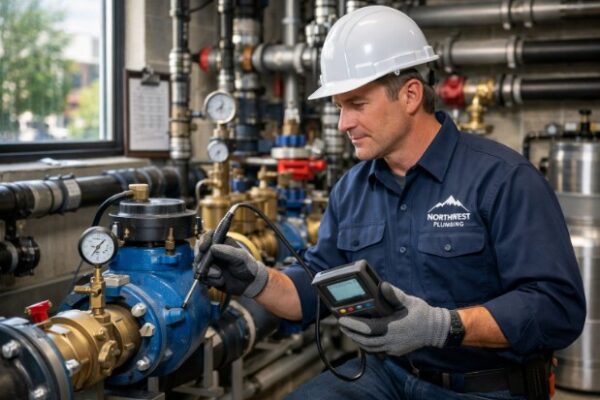
Plumbing problems in commercial buildings don’t just pop up overnight. They build up slowly—wear, age, daily use—until something finally gives and the tenant calls start rolling in.
A commercial plumbing maintenance program prevents these issues from snowballing by scheduling regular inspections and repairs before small problems escalate into costly emergencies.
In Portland, commercial plumbing maintenance programs help property managers proactively address tenant complaints and reduce after-hours emergency calls. These programs catch problems early, while they’re still cheap and easy to fix.
If you don’t have a plan, you’re just reacting—dealing with burst pipes, sewer backups, and water damage that you probably could’ve prevented.
The right maintenance program does more than just head off emergencies. It keeps your building up to code, reduces repair costs, and gives tenants fewer reasons to complain about plumbing issues that disrupt their day.
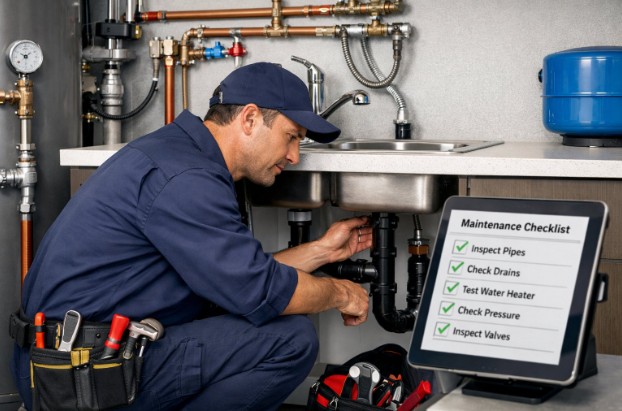
A commercial plumbing maintenance program targets the systems that cause the most tenant complaints and emergencies. These plans focus on preventing drainage backups, maintaining steady water pressure and temperature, and ensuring fixtures work reliably across your property.
Your commercial plumbing maintenance program uses multi-point inspections to catch problems before they disrupt tenants.
Regular checks spot failing valves and early pipe corrosion—issues that could otherwise cause emergency shutdowns.
Fewer emergencies mean you dodge after-hours service calls and the premium rates that come with them. Routine service protects your budget by fixing things during scheduled visits instead of scrambling in a crisis.
Fewer repeat complaints occur when techs document and resolve underlying issues, rather than just applying a quick fix. You receive written reports with actionable recommendations that address the root causes.
Fewer compliance surprises come from staying on top of backflow prevention device certification and water heater inspections. Portland’s water conservation rules and building codes are satisfied with proper documentation.
Drainage systems spark the most urgent complaints when backups hit. A good maintenance program includes sewer and storm drain camera inspections, grease trap cleaning, and preventive clearing of supply and drain lines before clogs form.
Domestic water systems require pressure testing and supply line inspections to ensure water flows where it should. You’ve got to exercise valves so they don’t seize up and shut down water to whole floors or units.
Hot water systems need water heater service and flushing to prevent sediment buildup, which reduces efficiency and shortens equipment life. Regular maintenance means tenants get hot water when they need it.
Fixtures and valves need testing and tweaks to prevent leaks and drips that drive up water bills.
Replacing water-efficient fixtures during maintenance visits helps reduce consumption, and tracking their details helps you plan replacements.
Reduce backups, odors, and hot-water outages with a documented maintenance program for your Portland tenants—Schedule an appointment with Modern Plumbing.
If you’re ready to get started, call us now!

Most tenant complaints? They follow pretty clear patterns. If you track these issues over time, you can identify root causes that are relatively easy to prevent.
Water damage complaints usually come from hidden leaks in supply lines or drain pipes. These leaks can go undetected for weeks, leading to mold growth and structural issues.
If you use electronic leak detection during routine checks, you’ll often catch problems before tenants even notice.
Low water pressure complaints? They usually mean mineral buildup, old fixtures, or supply line restrictions. Regular inspections help you spot which buildings need descaling or fixture swaps.
| Tenant Complaint | Root Cause | Preventive Task |
| Water damage or stains | Hidden leaks in walls or ceilings | Quarterly leak detection surveys |
| Musty odors or visible mold | Poor drainage or chronic moisture | Annual drain line inspections and mold prevention checks |
| Weak water flow | Corroded pipes or clogged aerators | Biannual water pressure testing |
| Slow drains | Buildup in drain lines | Monthly drain maintenance and cleaning |
| Toilet backups | Mainline blockages | Quarterly camera inspections of main lines |
When you proactively address maintenance issues, you reduce emergency repairs—sometimes significantly. Base your maintenance schedule on the complaint patterns you see in your buildings.
Portland’s property maintenance rules require certain plumbing standards and documentation. Miss these items during inspections, and you might get violations or costly corrections.
Building permit requirements and backflow testing protocols into your regular schedule keeps you compliant year-round.
All commercial plumbing work in Portland must comply with the city’s building code. You need permits for most plumbing installations, changes, and repairs—unless you’re just swapping a faucet or similar fixture.
Only licensed plumbers can work on commercial plumbing in Portland. Your maintenance program should verify contractor licenses before anyone starts work. Keep copies of permits and inspection records in your files, just in case.
Residential properties must be maintained to the codes in effect when they were built, altered, or repaired. Commercial buildings follow similar standards.
If you work without permits, you’ll face compliance issues during inspections.
Plan permitted work for your regular maintenance windows. That way, you’re not scrambling at the last minute if an inspector finds something unpermitted.
Portland requires annual backflow-prevention testing for every commercial property with backflow devices. Your maintenance program needs a way to track test dates and certification deadlines.
Hire a certified backflow tester to inspect and test each device every year. The tester sends the results straight to the city, but you should keep copies as well. If a device fails, fix it right away and retest.
Set calendar reminders 30 days before each backflow test deadline. This gives you time to schedule the tester and handle repairs before certification lapses. Track each device separately—install dates can vary.
Most compliance violations during inspections are due to expired backflow certifications. Build a checklist that includes device locations, last test dates, and tester contact information. Update it after every test cycle.
Want fewer emergency dispatches and fewer tenant complaints? Request a commercial maintenance audit from Modern Plumbing, then contact us to schedule your appointment.
If you’re ready to get started, call us now!
A preventive maintenance plan focused on drain care and hot water system checks helps prevent issues before tenants become frustrated. These two layers tackle the most common sources of after-hours calls and repeat tickets.
Clogged drains in one unit? They quickly turn into building-wide headaches when main lines back up.
Schedule quarterly drain cleaning for high-traffic areas like restaurant spaces, and monthly grease-trap cleaning for commercial kitchens.
Slow drains mean partial blockages are brewing. Your preventive maintenance should include camera inspections of main sewer lines every six months to identify tree roots, grease, and pipe deterioration before they cause issues.
Priority drain maintenance schedule:
Multi-tenant buildings multiply complaints fast—one clogged main line can affect five units at once. If you keep the drains clear in advance, you avoid the domino effect of backup calls from everyone with the same issue. Isn’t that what we all want?
Servicing your water heater every six months stops most no-hot-water emergencies before they start. Each visit should include anode inspection, sediment flushing, and water pressure testing.
Anode rods shield tank interiors from corrosion. Once they wear out, tank failure’s not far behind—usually just a few months away.
Checking and replacing anodes during routine water heater service can extend your equipment’s lifespan by years. It’s a small thing, but it pays off.
Essential hot water system checks:
| Task | Frequency | Prevents |
| Anode inspection | Every 6 months | Tank corrosion and failure |
| Sediment flushing | Every 6 months | Reduced capacity and efficiency |
| Water pressure testing | Every 6 months | Pipe stress and leaks |
| Pipe insulation inspection | Annually | Heat loss and frozen pipes |
Consistent temperature is just as important as having hot water. Maintenance should verify that thermostats are set to 120-140°F—hot enough for comfort, but not so high that people complain of scalding during busy times.
Different buildings need different maintenance schedules. Size, age, and daily usage all matter more than you’d think.
Adjust your preventive maintenance contracts to match your property’s actual needs. One size never fits all.
Recommended Maintenance Frequencies by Building Type:
| Building Type | Inspection Frequency | Priority Areas |
| Small Office (1-3 floors) | Quarterly | Restrooms, break rooms, water heaters |
| Large Office Complex | Monthly | All fixtures, main lines, and backflow preventers |
| Retail Centers | Bi-monthly | Public restrooms, kitchen areas, and grease traps |
| Apartment Buildings | Monthly | Common areas, plus annual unit inspections |
| Industrial Facilities | Monthly | High-use fixtures, floor drains, process lines |
Your plumbing maintenance checklist should include toilets, faucets, water pressure, drains, and visible pipes at every visit. More tenants or older plumbing means you’ll need to inspect more frequently.
Keep track of emergency calls and tenant complaints for three months. If you receive more than two plumbing complaints per month, it’s time to increase your inspection frequency.
Switch to a preventive maintenance schedule if issues keep popping up. It’s better to catch problems before tenants do.
High-traffic spots like lobbies and ground-floor restrooms? Check those every two weeks, even if the rest of the building is on a monthly schedule. Storage rooms and less-used fixtures can wait for your normal rotation.
A good work-order system sorts requests by urgency. Your team can get to the root of the problem faster when everyone knows what’s actually urgent.
Responding promptly to minor issues and maintaining strict access protocols prevent small plumbing issues from escalating into emergencies.
You really need three separate priority levels to handle maintenance requests efficiently.
Standard tenant tickets are issues like dripping faucets, slow drains, or minor leaks—nothing that’s going to damage the property. Aim to respond within 24 to 48 hours.
Urgent requests cover toilets that won’t flush in single-bathroom units or water heaters that keep going cold. These require attention within 4 to 8 business hours.
True plumbing emergencies can’t wait—jump on those within an hour. We’re talking burst pipes, sewer backups, total water loss, or gas leaks. Emergency repairs cost much more than planned maintenance, so catching issues early saves you a lot.
Train your front desk staff or answering service to ask the right question: “Is water leaking right now?” How many fixtures are out? Is there damage happening as we speak?
Your maintenance crew needs torespond quickly when plumbing issues arise. Keep master keys, unit codes, and mechanical room keys in a secure lockbox; authorized technicians should have 24/7 access.
Label all water shutoff valves clearly in mechanical rooms, risers, and individual units. Build a shutoff map showing the locations of each main, floor-level, and unit valve, along with their types.
Schedule non-emergency visits during tenant work hours whenever possible. Send out appointment confirmations a day in advance, with a clear entry window.
For after-hours work, maintain an on-call rotation and ensure you have response-time guarantees.
Your team should have building access cards, alarm codes, and the numbers for emergency plumbers who actually stock the right parts for your building.
This preventive approach can shrink the gap from complaint to fix from hours to minutes.
You need real data to show your maintenance program works. KPI reporting software automates data collection and visualizes metrics so you don’t have to wrestle with spreadsheets every week.
Essential Metrics to Track:
Your plumbing inspections should feed right into these reports. Count how many issues you catch during routine visits compared to emergencies.
Compare your baseline numbers from before the program to your current numbers. Ideally, you’ll see a 30-40% drop in emergency calls in the first year—and fewer tenants reporting the same problems over and over.
Create monthly reports that spotlight trends. Are kitchen drain calls dropping? Are water heater complaints finally under control? Spotting patterns and themes helps you figure out what’s actually working.
Share your reports with property owners and managers every quarter. Use simple charts and graphs—don’t make them squint. Show the cost savings from avoiding major repairs and the boost in tenant satisfaction.
At Modern Plumbing, our commercial maintenance program starts with a practical review of your building’s plumbing so you can reduce emergencies and stay inspection-ready with clear documentation.
We walk the property and identify the systems most likely to trigger after-hours calls—water lines, drains, fixtures, shutoffs, backflow devices, water heaters, and sewer lines.
You receive a priority list that separates “fix now” items from “monitor and plan” items, making repairs predictable rather than disruptive.
After each visit, we provide service records that include dates, completed tasks, parts replaced, and notes or photos of developing issues.
These logs provide property managers with proof of ongoing upkeep, help explain responses to tenant complaints, and make it easier to demonstrate to owners and insurers that the building is being maintained responsibly.
Modern Plumbing can develop a preventive maintenance plan that reduces after-hours calls, protects tenants, and keeps your Portland property inspection-ready. Schedule service today.
What is a commercial plumbing maintenance program?
A commercial plumbing maintenance program is a scheduled plan of inspections, testing, and preventive service (drains, fixtures, shutoffs, water heaters, backflow) designed to catch failures early, reduce after-hours calls, and document compliance for owners and inspections.
How often should a Portland commercial building schedule plumbing maintenance?
Most properties benefit from at least annual preventive maintenance, but multi-tenant buildings, older plumbing, and high-usage sites often need service every six months or quarterly. Frequency should increase when repeated drain clogs, odors, pressure issues, or hot-water complaints appear.
What maintenance tasks reduce tenant complaints the most?
Programs that lower tenant complaints prioritize drain performance (cleaning, line checks), fixture reliability (toilets, faucets, supply valves), hot-water stability (water heater checks), and pressure/shutoff readiness. These areas account for most repeat tickets, including slow drains, odors, leaks, and no hot water.
Do plumbing maintenance programs actually save money for commercial properties?
Yes—preventive maintenance reduces emergency dispatches, water damage risk, and repeat callbacks while improving system efficiency and equipment life. The biggest savings usually come from avoiding after-hours rates, major leak events, and downtime-related tenant dissatisfaction or concessions.
Is annual backflow testing required for commercial properties in Portland?
Often, yes. The Portland Water Bureau notes that backflow prevention assemblies must be tested annually, and that repairs or replacements must be handled promptly if the device fails. Facilities with cross-connection risk typically require documented testing to maintain compliance.
Who can pull a commercial plumbing permit in Portland?
For commercial sites in Portland, the city requires that a licensed plumbing contractor obtain the permit and perform the work. This is important when maintenance identifies repairs that fall within permit-required scope.
What should property managers track to reduce repeat issues and complaints?
Track a simple work-order system: issue type, location, response time, resolution time, repeat incidents, and any contributing conditions (occupancy spikes, grease load, pressure fluctuations). Encourage prompt reporting so small issues don’t escalate into emergencies or recurring tenant complaints.
Quick Links
Plumbing Services
SW Washington Service Areas
Oregon Service Areas